
NASA Artemis II launch: Behind the broadcast
One of the world’s most innovative organisations, NASA, only just broke into the streaming space. We take a closer look at what it’s doing right now – from live feeds of the International Space Station to the new(ish) NASA+ platform.

15.04.2026
7 min read
Images by NASA
It’s hard to believe that before 2023, NASA – the United States’ National Aeronautics and Space Administration, if you’re not familiar – didn’t have a dedicated streaming platform. For over half a century, it has been documenting its work through still photographs, video recordings and audio streams, with one-liners that have made it into mainstream vernacular (think: ‘Houston, we have a problem’, and ‘That’s one small step for man, one giant leap for mankind’.)
A few years ago, NASA watched as the world turned to streaming. “That’s how people consume; we wanted to join the modern times,” states Rebecca Sirmons, general manager at NASA+, the government-funded organisation’s free streaming platform. “We undertook a multi-pronged launch,” she says, with the first major event being a live stream of the 2024 total solar eclipse. Right off the bat, the team won an Emmy (and a Webby!), marking a new chapter for NASA – one where education meets live entertainment.
An international audience
NASA isn’t short on content; you could spend days in its public photo, audio and video library (images.nasa.gov). Where NASA has struggled, historically, is live content. Streaming from space isn’t simple.
In the early days (before digital workflows existed), NASA’s videos were shot on film, and it wasn’t until that film was developed that it could be broadcast. “Just last year, we showed our first live landing of astronauts in the water,” recalls Lee Erickson, lead streaming engineer at NASA+. “You saw the parachute open. You saw it splash down – that was all live. That’s the first time we ever did that.”
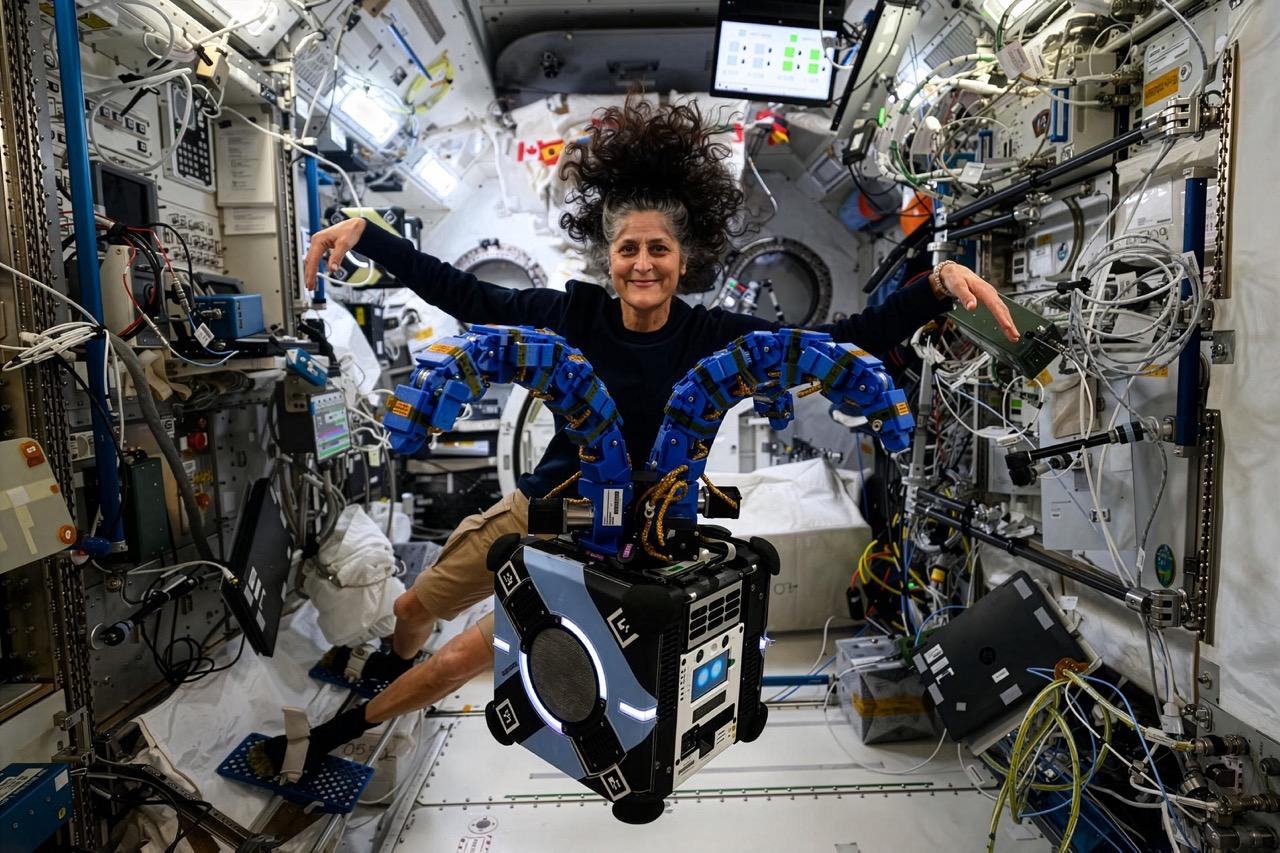
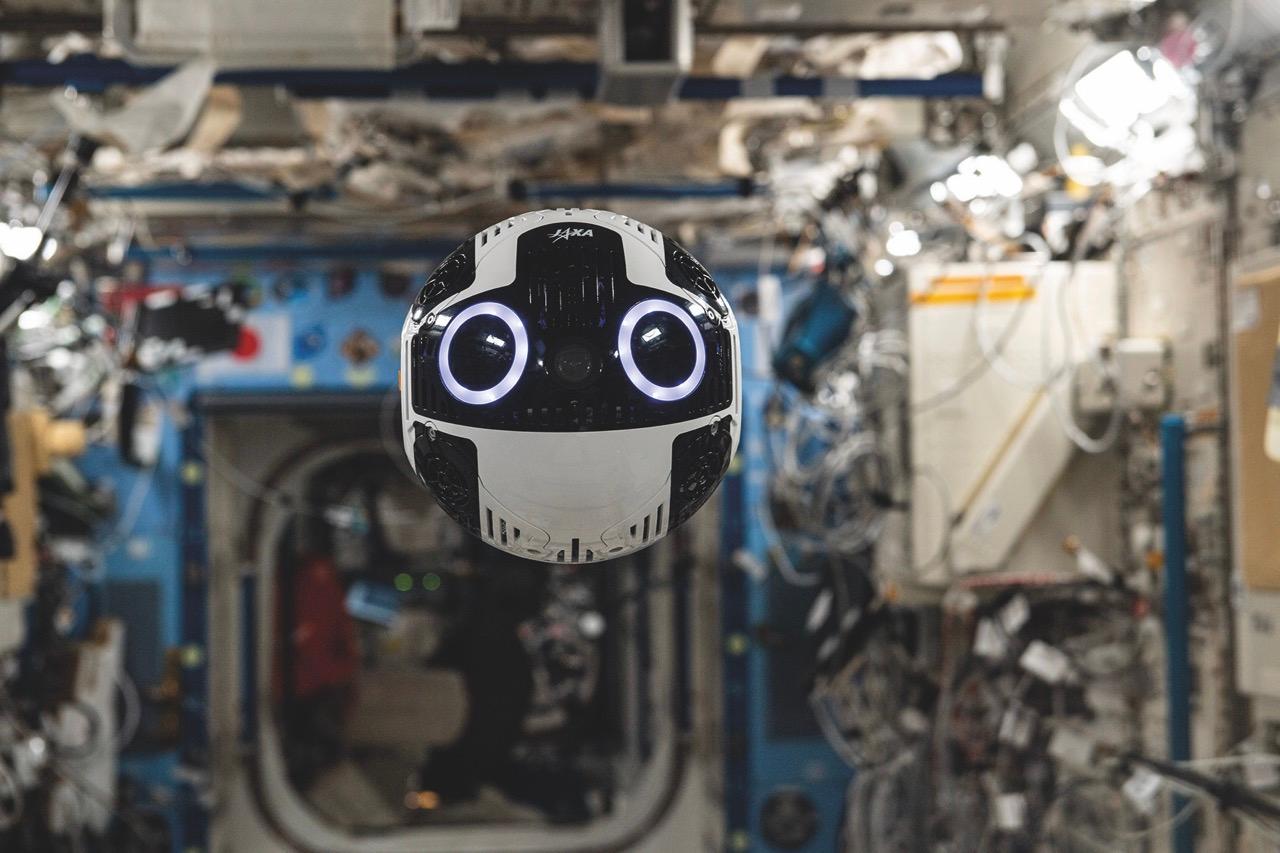
NASA has, as keen followers will know, been streaming video from the International Space Station (ISS) for some time. “You can go on YouTube, click on a link and watch a live feed,” says Erickson. The stream – usually an image of the Earth from above – regularly receives millions of viewers every day and is available online and via the ISS Live Now app. “We are a global phenomenon – it’s not just in the United States. There are people from all over the globe who want to watch our stuff.”
Sirmons expects the next lunar landing, currently scheduled for early 2028 (Artemis IV), to be the world’s largest livestreaming event to date. “We’re looking at around 250 million, and it might be more,” shares Sirmons. “For us, it’s about laying the track, working with partners and making sure that we’re solid.” The Artemis II mission, scheduled for April 2026, will also be streamed on NASA+ and Sirmons expects an audience of 25 million.
In its lead-up, viewers can watch Moonbound, a two-part series which details the mental and physical preparations involved in a lunar mission. “It’s the biggest hit we’ve had thus far,” says Sirmons. “Our premium docs give people something that only NASA can give them, and that is 100% accuracy and truth. You’re behind the curtain.”
Other successful projects include Space Out, an immersive viewing experience that’s perfect to throw on in the background; Far Out, a kids’ programme that ‘does exceptionally well’, according to Sirmons; and Planetary Defenders, a portion of which showed at last year’s Sundance Film Festival.
“Anytime we turn on the live spigot,” adds Erickson (they pre-schedule live events too), “there’s an instant million to two million people waiting. That’s where we start. It doesn’t matter what it is; it’s NASA. They’re tuned in.”
Mastering the moonwalk
When running a live stream through space, there’s a lot to consider – starting with the environmental conditions outside the Earth’s atmosphere. “You just can’t put anything in space because there’s radiation,” Erickson explains. “Our problem is having a camera sensor that doesn’t die, and can handle the
G-force when it launches.”
Other key elements include working within the spacecraft’s weight limits (“we can’t put a big antenna on it,” says Erickson) and ensuring that vitals and other health and safety data takes precedence over a video signal. “There are a bunch of compromises on what we can do, and we have to work with partners to get everything tested. The technology is all there, it’s just finding the right technology that meets all the engineering specs.”
There are practical constraints when filming a lunar landing, too. For one thing, the astronauts will be wearing thick gloves, making it tricky to operate any camera equipment themselves. When they land, they’ll also be on the dark side, meaning they’ll have to take lights – and, once illuminated, the astronauts run a high risk of blending into the background, as both their suits and the moon’s surface are white.
Despite all the barriers that stand in their way, NASA is testing various methods of sending live video signals from outer space – including using the Deep Space Network. “It’s a chain of satellites that you can send one signal to, and it bounces around to these other satellites, so it eventually gets to a position where we can send it back to Earth,” Erickson describes – in the simplest terms possible. “They’re testing being able to get data over lasers. They’re testing things like using mobile phone technology to get bandwidth on the moon,” he continues. “It’s really cool to see how everybody’s working together.”
That’s one thing NASA isn’t short of: collaborators who are eager to lend a hand. “All we’ve got to do is pick up the phone, and the industry is willing to help us,” Erickson admits. NASA’s partnership with Amazon Web Services, for instance, allowed it to capitalise on the cloud. “AWS spun up a bunch of broadcast tools for us. As technology changes, we won’t have to buy new hardware; everything is virtual now, so we can make quick changes.” NASA’s been able to expand its streaming service to external platforms like YouTube, Netflix and Amazon Prime.
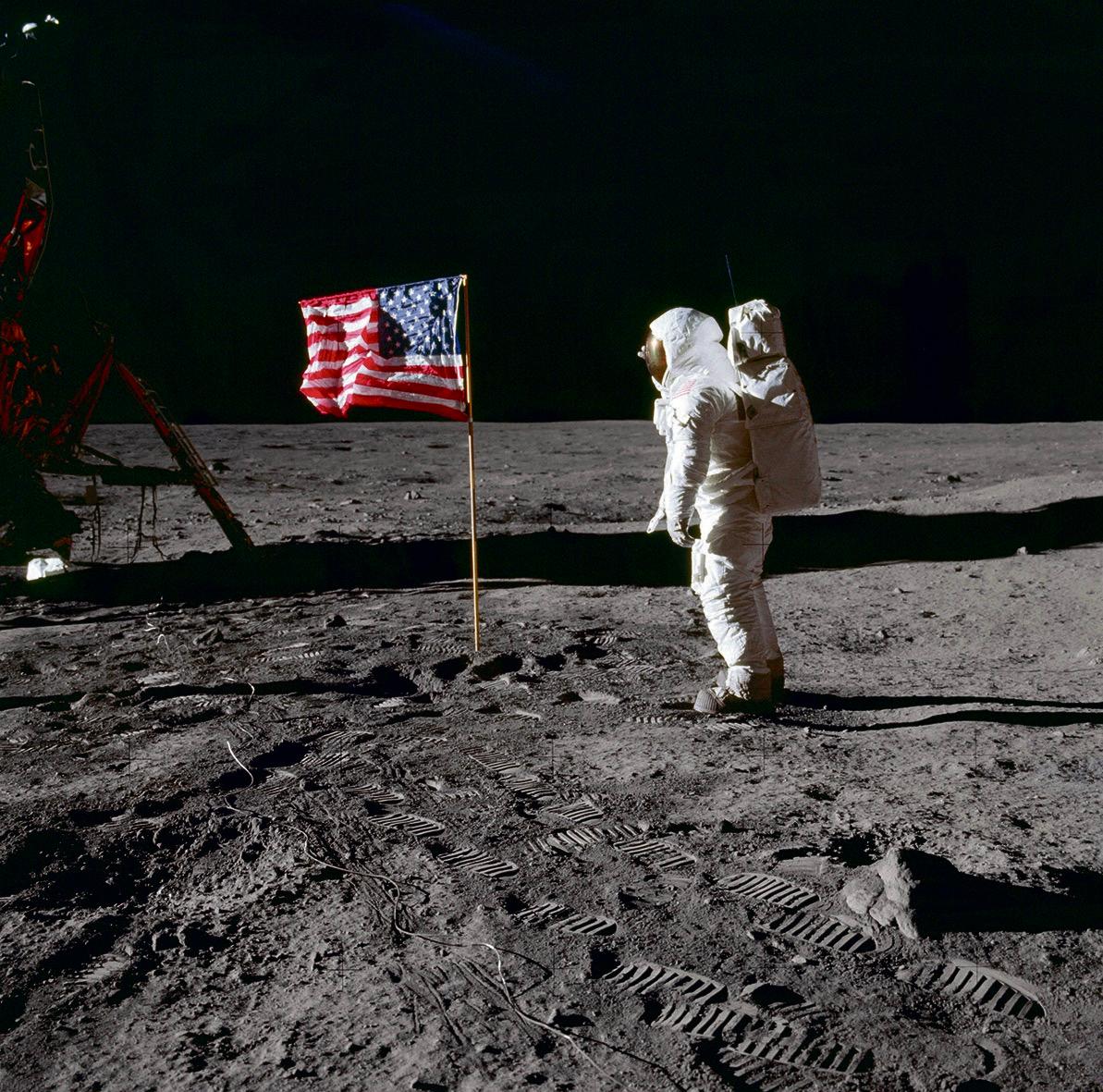
Astronaut Edwin E. Aldrin,Lunar Module (LM) pilot, poses for a photo beside the U.S. flag that has been placed on the moon.
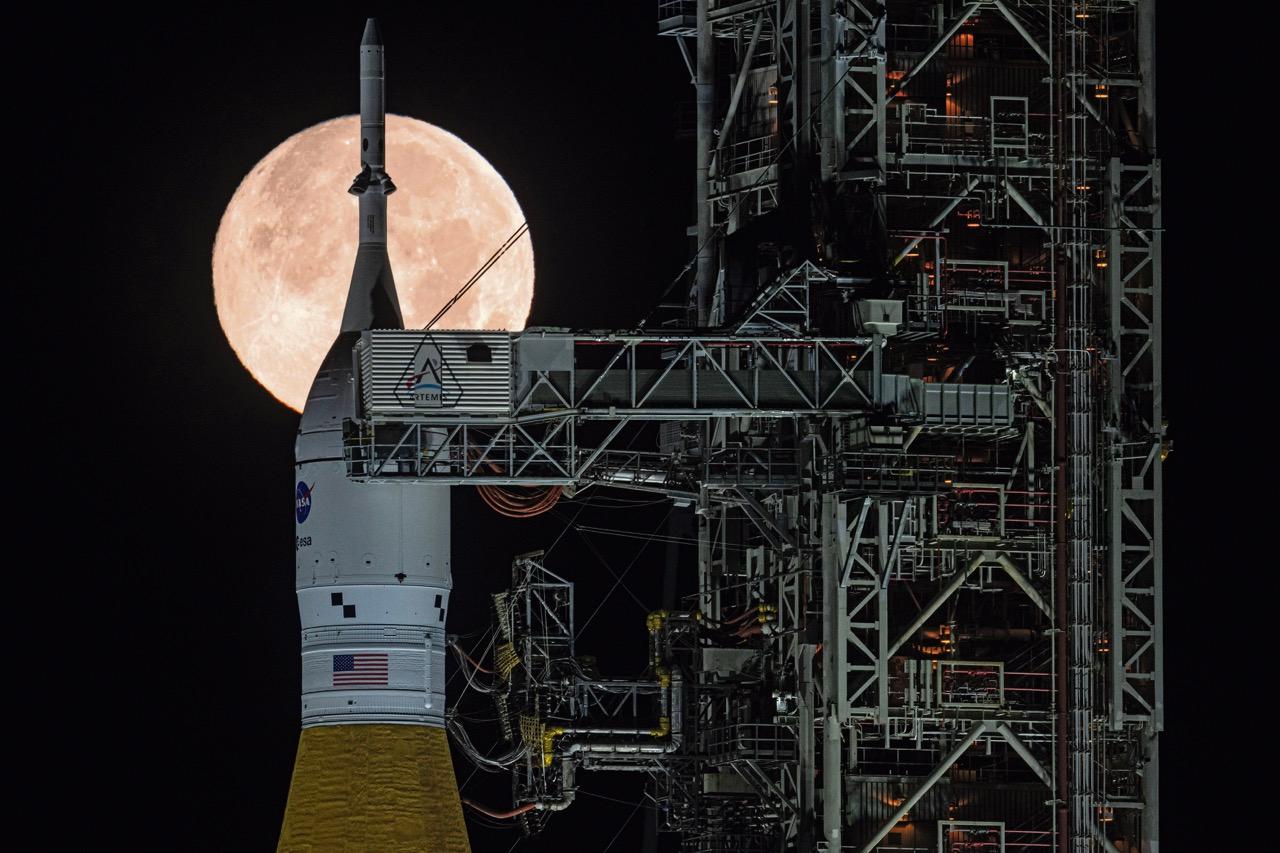
The full Moon is seen behind NASA’s Artemis II Space Launch System (SLS) rocket and Orion spacecraft.
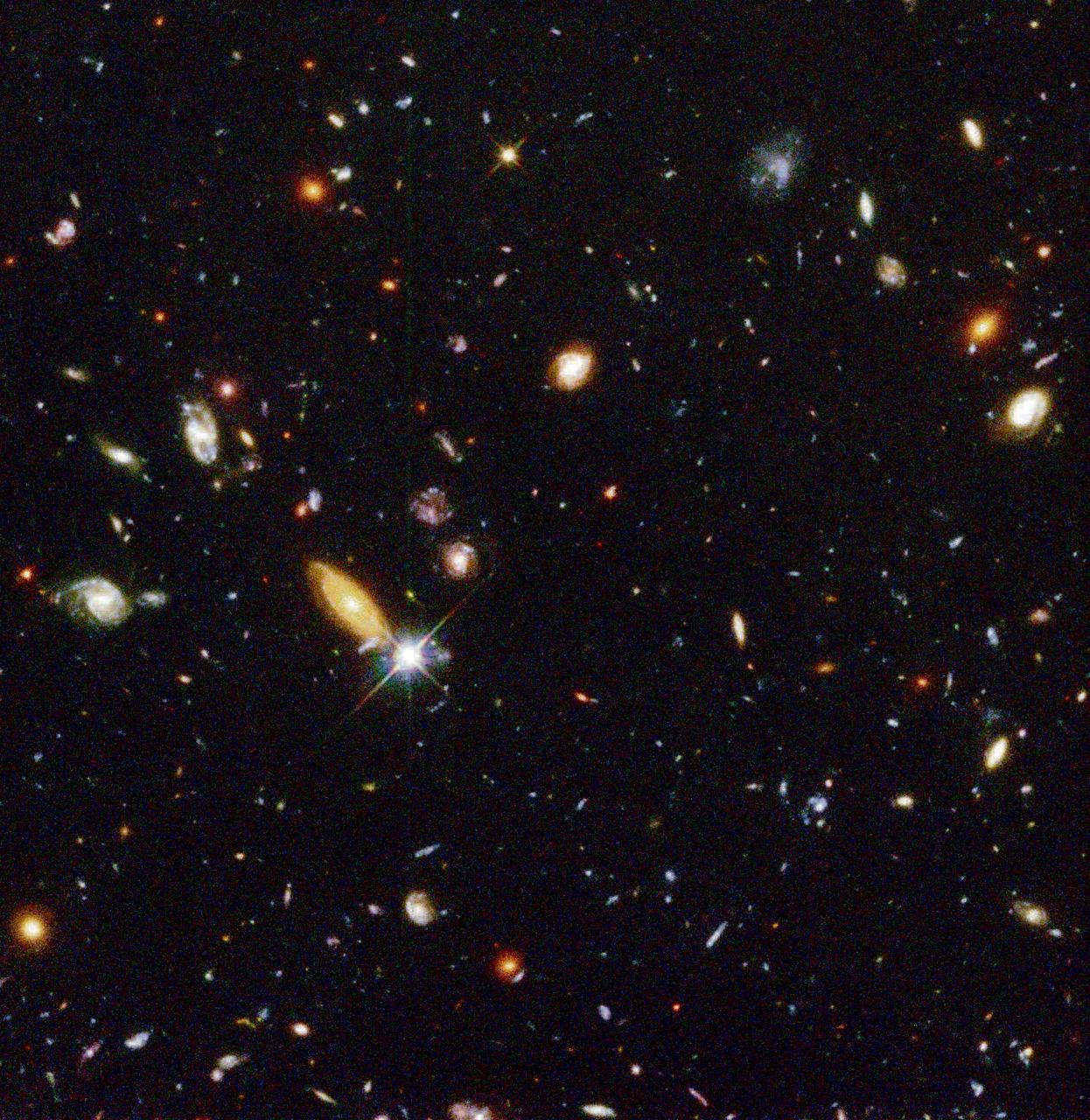
Several hundred never before seen galaxies are visible in this deepest-ever view of the universe, called the Hubble Deep Field, made with NASA's Hubble Space Telescope.
Out of this world, every day
NASA isn’t part of the streaming wars, and its ultimate goal isn’t to compete. Instead, NASA+ is a completely free service built for the widest possible audience. The National Aeronautics and Space Act of 1958 – which officially founded NASA – states: “Activities in space should be devoted to peaceful purposes for the benefit of all mankind,” and that the organisation serves to expand human knowledge. NASA+ follows that same guideline.
“It’s not about money; it’s to share NASA’s story,” says Sirmons. “We are doing just that. You’re watching history unfold in front of your very eyes and, to me, there’s something so beautiful about that.” While working within the confines of a government-backed budget presents challenges, ‘it’s the most creative place’ because it embraces experimentation.
For Erickson, that’s exciting. “Every time we turn on a camera, there’s some first – there’s always something new,” he shares. “Here’s the new suit; here’s the new Orion capsule; here’s the new Artemis launch; or here’s the new thing that we’re going to put on the moon. You’re worn out and exhausted, but you’re happy because you can say that you contributed to humankind.
“If we don’t see it, we didn’t do it,” he adds, and that motto guides Erickson’s work. “It’s our job to make sure that we have video and we have pictures – that people believe we went to the moon.” Of course, there will always be some conspiracists, but the hope is to persuade even
the firmest non-believers.
For Sirmons, working for NASA is, in short, a dream job. “I’m honoured every day that I get to come here and do this,” she gushes. “To me, NASA+ is our Field of Dreams. We built it, we set the stage. Now go – play ball.”
Read more at plus.nasa.gov
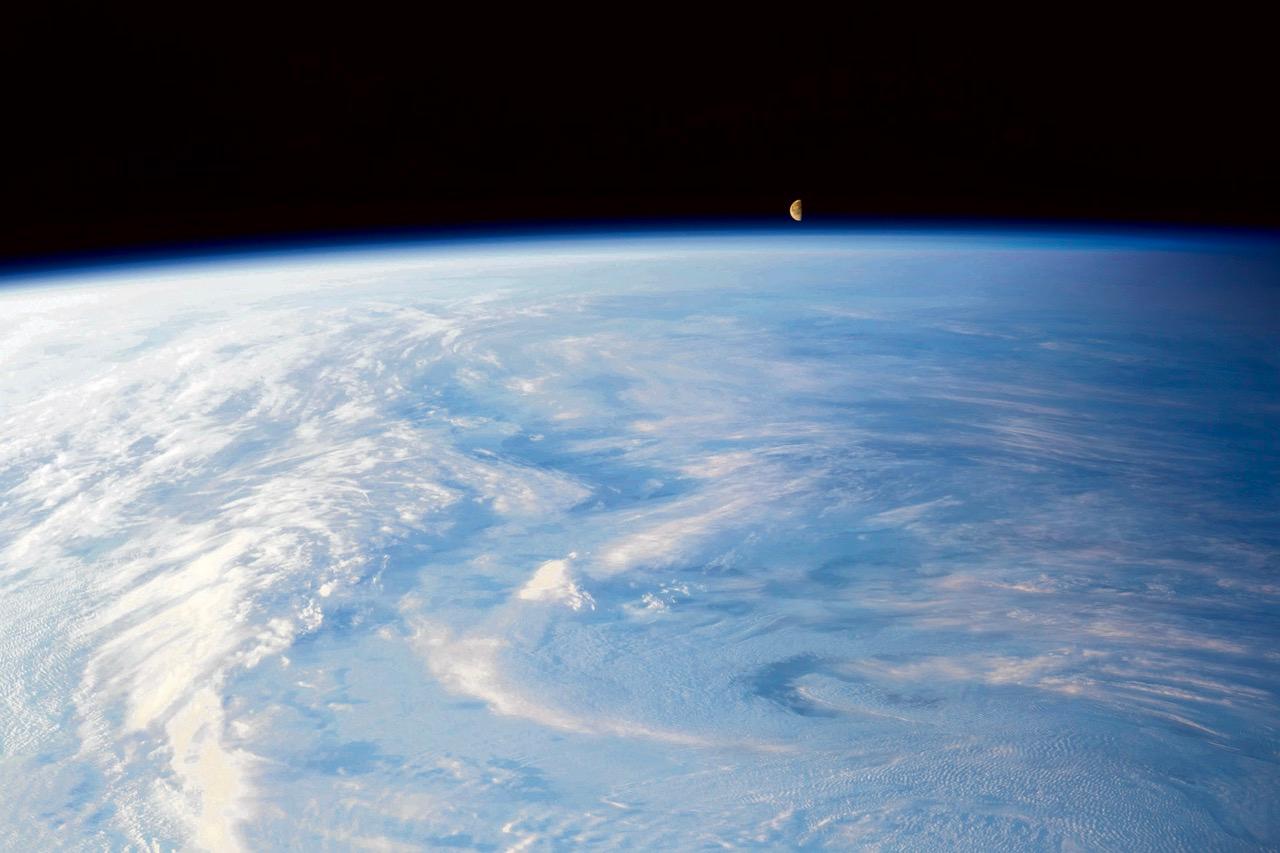
The waning gibbous Moon is pictured just above Earth's horizon in this photograph from the International Space Station as it orbited 262 miles above a cloudy central Asia.


