
IBC 2026 Guide
AI gets practical, sport gets smarter, creators keep rewriting the rulebook and trust becomes a technical problem. Here’s what to look out for at IBC 2026.
Words Verity Butler / Images IBC
There is a particular point every September when the global media and entertainment industry effectively decamps to Amsterdam. For four jam-packed days, the expansive RAI exhibition centre becomes a sprawling meeting point for broadcasters, streamers, technology companies, content owners, service providers, creators and pretty much anyone else who has an opinion about where media is heading.
Running from 11 to 14 September, IBC 2026 brings together exhibitors and visitors from more than 170 countries, with 1200+ exhibitors expected to occupy more than 45,000 sq m across 14 halls. There will be plenty of shiny new kit to investigate, but the more interesting question this year is what all that technology is actually being used for.
Because the industry has moved on from simply asking: what can this technology do? The question seems to be: is it useful, can we afford it and does it solve an actual problem?
That shift is reflected across this year’s show. AI is moving from demo-stage novelty towards real production and business applications. Cloud and IP workflows continue to reshape infrastructure. Sports rightsholders are looking for new ways to turn data into better fan experiences. Creators and social platforms are challenging traditional definitions of a media company. Meanwhile, content provenance, cybersecurity and authenticity are becoming more and more difficult to separate from the technology stack itself.
And, perhaps most importantly, there is a growing emphasis on making connections that result in something more substantial than a hurried exchange of business cards.
So, if you will be heading to Amsterdam, here’s what deserves a place on the itinerary.
AI: less hype, more homework
It would be strange for AI not to dominate the conversation at IBC, but this year’s programme suggests the discussion is becoming a little more grown-up. Rather than simply marvelling at what generative AI can produce, IBC 2026 is looking at where AI is actually being deployed across the media value chain – from production and post-production to news, distribution, discovery and business operations.
The conference opens with ‘Disrupt, Innovate, Create: How to embrace AI’, featuring Particle6 founder and CEO Eline van der Velden and AI actor Tilly Norwood, who will appear virtually. It promises to tackle some of the trickier questions around AI-generated creativity, authorship and originality alongside the obvious question of what the technology can actually do.
Elsewhere, ‘Applying AI: Predictive, generative or agentic?’ will look at different approaches to AI with speakers from Respeecher, Bertelsmann and ITN, while CTOs from Olympic Broadcasting Services and Canal+ will discuss how AI is reshaping the media business.
Future Tech gets bigger – and not to mention more useful
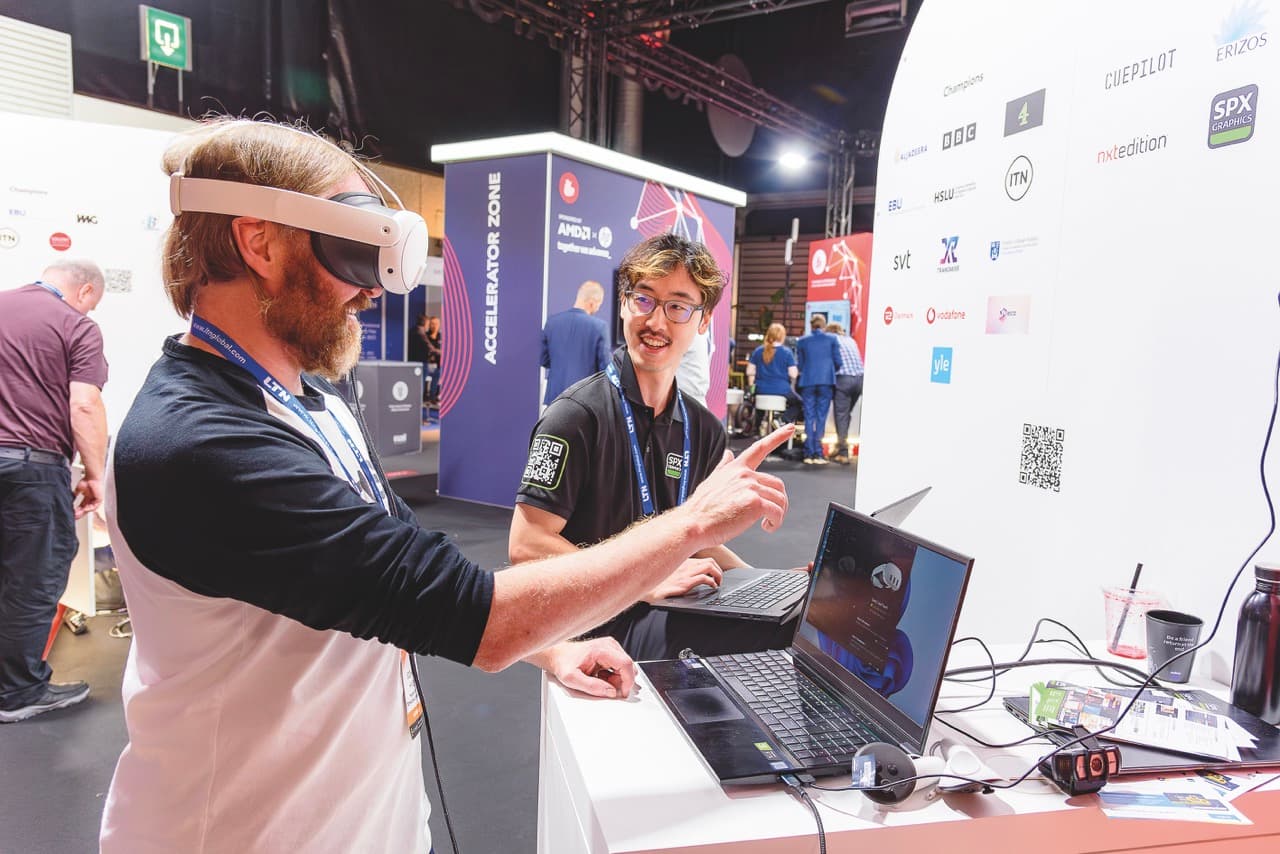
One of the most significant changes to the physical show is the expansion of Future Tech in Hall 14, which is set to be 30% larger than last year.
Having launched in 2025, Future Tech is now positioned as a more established part of IBC, bringing start-ups, scale-ups, emerging tech and collaborative innovation projects together in one place.
New for 2026 is Future Tech Ignite, which will connect more than 50 start-ups, entrepreneurs and emerging technologies with the wider M&E industry.
There will be a dedicated Start-up Zone, an Ignite Stage and a four-day programme covering emerging technology, skills and talent. The latter is becoming quite important as media companies contend with rapidly changing technical requirements and an industry workforce that needs to keep up.
The IBC Talent Programme is also returning for its third year, bringing together educators, employers, industry bodies and emerging talent to tackle those skills questions.
The creator economy isn’t going anywhere
Traditional broadcasters and streamers no longer have a monopoly on audience attention – and IBC is giving that reality plenty of airtime. Media Universe cartographer Evan Shapiro will present ‘The Creator Economy Rules’, followed by a panel featuring BBC Studios Digital Brands, Snap, Tubi, Sidemen Entertainment and Meta.
Creators are building audiences, launching businesses, producing premium content and working directly with brands, while established media organisations are experimenting with formats and distribution strategies designed for audiences that discover content outside traditional schedules and platforms.
That links directly into another conference theme: brands becoming media companies themselves.
The session ‘Brands as Media: Reinventing the relationship between content and advertising’ will explore how companies are using content, culture and communities to reach audiences, with speakers from Banijay, Vice Media Group, Vinted and M&C Saatchi Sport and Entertainment Europe.
For broadcasters, the implication is fairly straightforward: competition for attention is coming from more directions than ever.
Sport remains the ultimate tech stress test
If you want to see media technology being pushed particularly hard, follow the sports crowd.
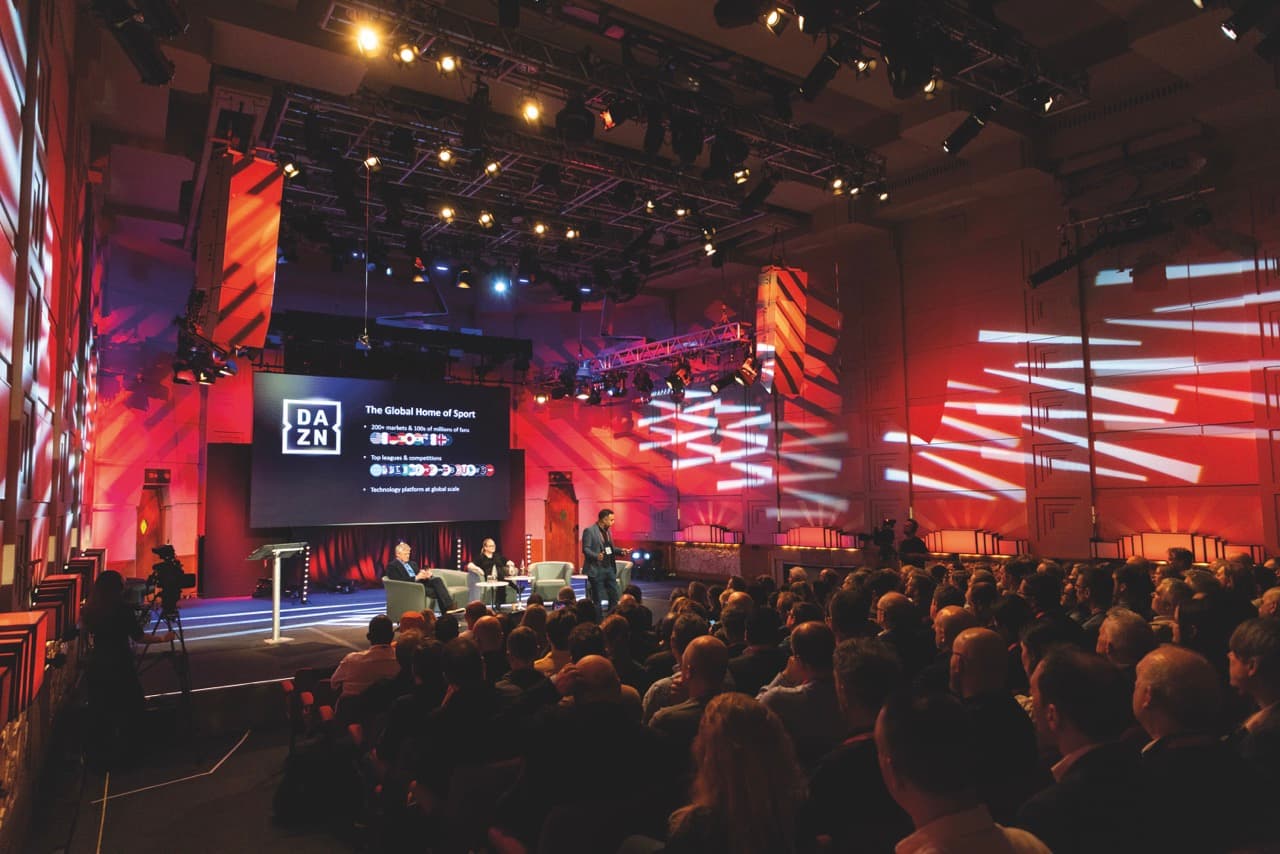
IBC 2026 has a substantial focus on live sport, with FIFA, UEFA, OBS, Liga Portugal and the Women’s Super League among the organisations represented in the programme.
‘The New Playbook for Sports: AI, data, fans and rights’ will examine how technology is changing the relationship between rightsholders and audiences, while ‘Live Sports at Scale: Redefining the art of the possible’, featuring OBS CEO Yiannis Exarchos, will look at the practical realities of delivering huge live events to global audiences.
The technology challenge here is becoming complex. Fans don’t necessarily want to sit down and watch the same feed as everyone else. They want statistics, alternative views, personalised experiences, clips, social content and immediate access across whatever screen happens to be nearest.
That creates an enormous production and distribution challenge – but also a commercial opportunity. Expect AI, real-time data, cloud production, remote workflows and sophisticated personalisation to feature heavily in conversations around the sports ecosystem.
Content Everywhere is, well, everywhere
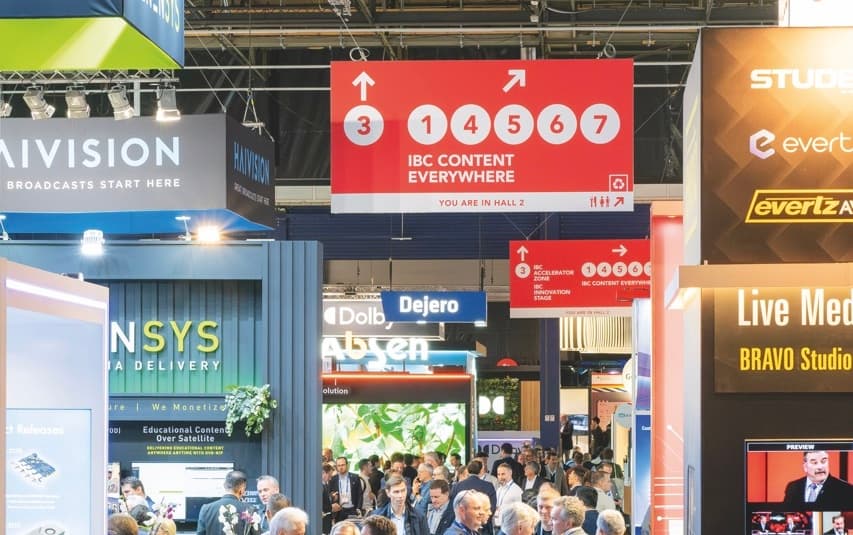
Content Everywhere in Hall 5 is another area to put on the list, with Google returning as an exhibitor and bookings significantly up year on year.
The name gives away the central challenge: content now has to travel across a fragmented collection of platforms, devices and viewing environments. A conference session titled ‘Choice, Curation and Context? What do audiences want, from where and how?’ brings together speakers from Samsung TV Plus, ITV and Warner Bros Discovery to explore exactly that problem.
The issue isn’t necessarily a lack of content. If anything, audiences have too much of it. The technical and commercial challenge is making sure they find the right content – and giving them a reason to keep watching.
Trust becomes part of the tech stack
AI-generated content has created an awkward problem for the media industry: if almost anything can be generated, manipulated or altered, how do you know what you’re looking at is authentic? IBC is putting that question firmly on the agenda.
The ‘Security, Authenticity and Provenance’ session will bring together speakers from LaLiga, Globo and Google to examine how the industry can establish greater trust in content.
For news organisations, sports rightsholders and premium content owners in particular, knowing where content came from, whether it has been altered and who has permission to distribute it is important. It also ties into the broader issue of trust in an AI-heavy media environment. If audiences become less confident about what they are seeing, media companies need technical systems that can provide some reassurance.
Expect this to be one of those topics that sounds niche until you realise it affects practically everything.
Keep an eye on the show floor
There is, inevitably, plenty of established industry muscle returning to Amsterdam. Here’s who we think is worth paying a visit:
Atomos – Hall 7, B19
If you’re interested in where production is heading, Atomos is worth a stop for its take on compact monitoring, recording and switching. Its focus on making professional workflows more portable makes it particularly relevant to smaller crews and creators.
Blackmagic Design – Hall 7, C49
Blackmagic is always one to investigate, largely because its ecosystem spans cameras, switching, post-production and live production. With the company continuing to blur the boundaries between cinema, broadcast and creator workflows, there’s usually plenty to see.
Clear-Com – Hall 10, D29
For a reminder that not everything at IBC needs to involve AI, head to Clear-Com. Its communications and intercom technology sits at the heart of live production, helping crews coordinate everything from studios and OBs to theatre and events.
Cobalt – Hall 8, F90
Cobalt Digital is a good stop for anyone interested in the infrastructure quietly holding modern broadcast operations together. Expect plenty around signal processing, conversion, routing and IP workflows – the less glamorous technology that still has to work flawlessly.
Gravity Media – Hall 10, C27
Gravity Media is well worth a visit if next-generation live workflows are on your radar. Its new OB truck launch is among the highlights, alongside expertise across production, broadcast technology and solutions designed for demanding live content.
Lawo – Hall 8, B90
Lawo is one for anyone interested in the continuing transition towards IP and software-defined production. Its work across audio, video, control and network infrastructure makes it a useful stop for seeing how distributed broadcast operations are being put together.
Matrox – Hall 7, B15
Matrox is worth seeking out for its work around professional video infrastructure, particularly as production environments become IP-based, distributed and software-driven. It’s a useful place to explore the technology connecting sources, systems and workflows behind the scenes.
PTZOptics – Hall 1, B07
PTZ cameras have gone from niche convenience to a serious production tool and PTZOptics is a good place to explore why. Its focus on flexible, remotely operated production makes it particularly relevant to studios, education, corporate video and smaller teams.
Riedel – Hall 10, A24, A31, A38
Riedel has become a major player across communications, signal distribution and live production, making its stand a worthwhile stop for anyone interested in the infrastructure behind complex events. Its expanded IBC presence also reflects the company’s growing footprint at the show.
Sony – Hall 13, A10, D201; Hall 2, G111
There is a lot to explore across Sony’s huge media technology ecosystem, from cameras and production to displays and workflow. It’s particularly worth a look if you want to see how one manufacturer is connecting acquisition, production and distribution.
There is plenty of new blood, too. More than 50 companies are making their first appearance, including Barco, Dropbox, Leica, Rakuten, Scaleway and TVUP.
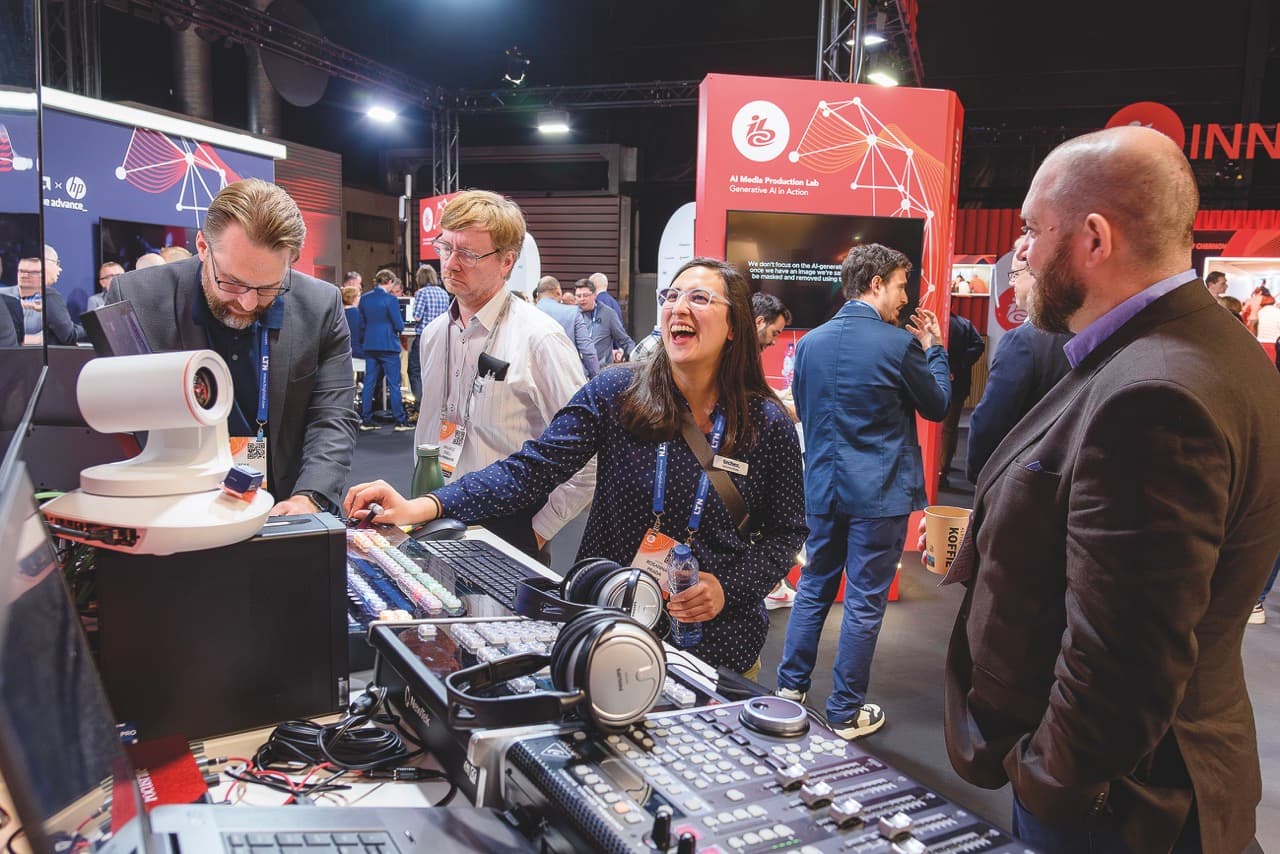
And then there’s the stuff you didn’t plan to see
That’s probably the most reliable piece of IBC advice. The show is simply too large to approach as a checklist. You can spend four days marching between pre- booked meetings and still miss something interesting happening two aisles away.
The IBC Technical Papers Programme is worth dipping into if you’re after something more substantial than a product demo, with peer-reviewed research covering AI production, coding, content trust and provenance, XR and multiview, TV distribution, dynamic media facilities and AI indexing.
The Accelerator Media Innovation Programme is another one to watch, bringing broadcasters, streamers, technology companies and research partners together to work on practical industry problems. Google returns as headline sponsor, with EIT Culture & Creativity joining as Innovation Partner.
And, of course, there will be the inevitable collection of cameras, screens, servers, microphones, software platforms, AI demos and equipment that makes you briefly wonder whether the media industry has collectively decided to rebuild itself from scratch.
If IBC 2025 was about getting a glimpse of what was coming next, IBC 2026 looks rather more interested in what happens when those technologies have to actually earn their keep.
This article appeared in our IBC 2026 issue


