
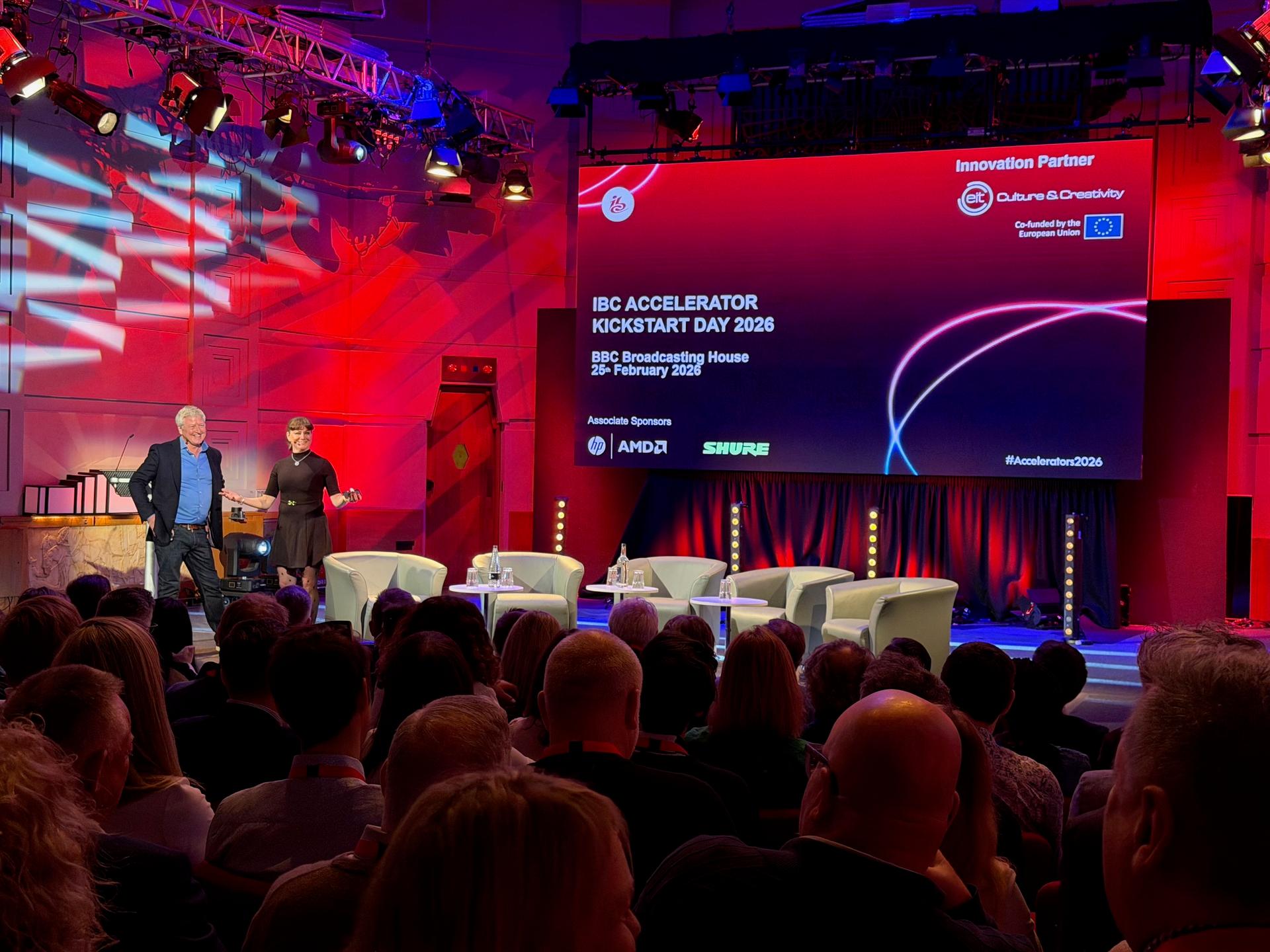
IBC Accelerator Kickstart Day at BBC sets stage for AI-driven media innovation ahead of IBC 2026
The road to IBC 2026 began at the BBC yesterday, with bold Accelerator pitches tackling sustainability, AI-powered live production and the future of personalised streaming

|26.02.2026
7 min read
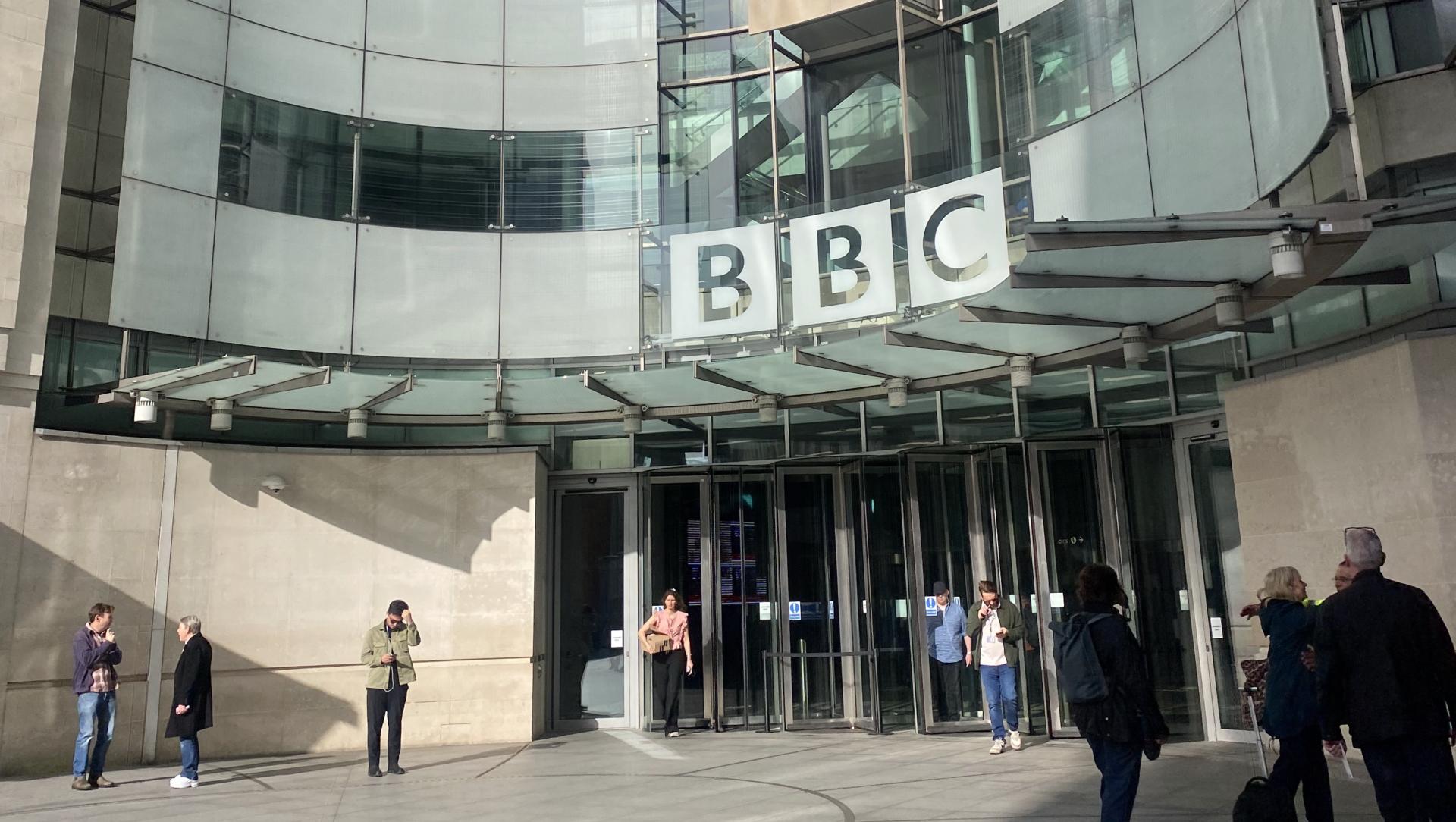
Yesterday, I walked through the doors of the BBC Broadcasting House with a notebook in one hand and a sense of curiosity in the other. It was my first time attending the IBC Accelerator Kickstart Day, the unofficial starting gun for months of collaboration that will culminate at the IBC Show in September.
There was definitely something poignant about it being hosted at the BBC. After all, IBC itself also began in London in 1967, at a time of seismic change – the arrival of colour live television. Almost 60 years later, we’re navigating a different shift. This one includes agentic AI, software-defined workflows, quantum security, sustainable streaming and more.
Before the pitches and keynotes even began, IBC made a major announcement that set the tone for the whole event.
IBC revealed EIT Culture & Creativity has been appointed European Innovation Partner for IBC 2026. A strategic collaboration designed to amplify pathways from proof-of-concept innovation to real market deployment across the global media and entertainment ecosystem.
This partnership marries EIT Culture & Creativity’s pan-European network of start-ups, research institutions, creative clusters and investors with IBC’s global reach across its conference, exhibition and media platforms.
What is the IBC Accelerator?
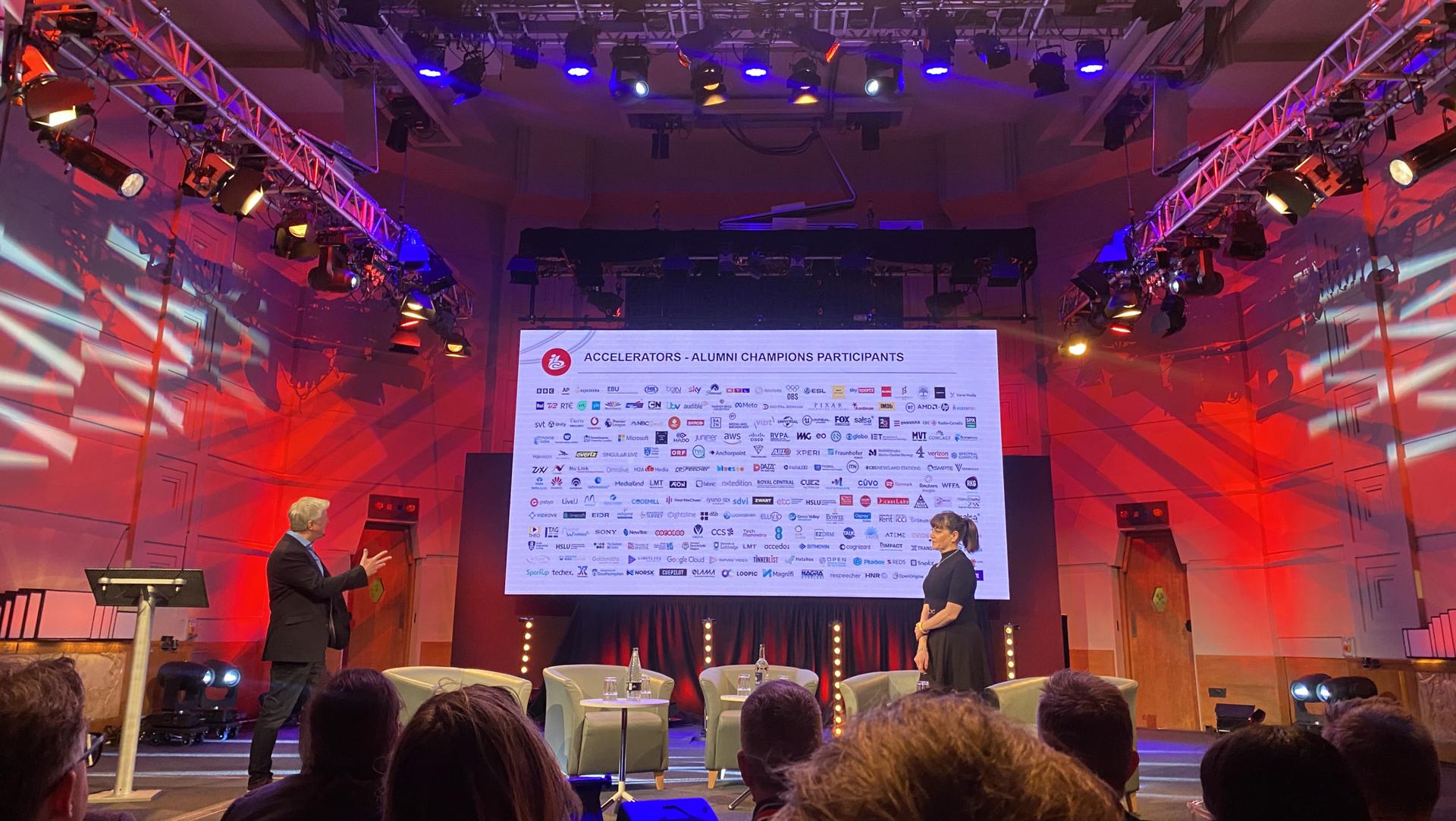
If you’ve ever wandered IBC’s show floor, you’ll know all too well how overwhelming it can be. A sprawling city of stands, demos, meetings and panels. The Accelerator Programme exists to elevate some of those big and abstract ideas into working prototypes. Here’s how it works:
- The Champions consist of broadcasters, studios, online platforms, content producers, rights owners and solution providers, who propose real business and technical challenges they genuinely need solving.
- The participants form a variety of vendors, manufacturers, developers and solution providers – who create project teams to design and test new workflows and technologies that address those challenges.
Understandably, there are fees involved, but they cover the cost of running a programme for the entire year. Ultimately, this isn’t just a three-day show-floor gimmick. The core idea is continuity. Work commences months prior to IBC, continues during it – and lives on after it. For vendors, that means year-round engagement with customers rather than a frantic week of badge-scanning. For broadcasters and rights holders, it means structured collaboration on problems far too complex for one organisation to solve alone.
Yesterday, we were given examples of just how tangible some of these ‘experiments’ have become. One past Accelerator helped pioneer 5G networks for major live broadcasts – technology and ideas that went on to support coverage of the likes of the Paris 2024 Olympics, London’s New Year Fireworks, Queen Elizabeth’s funeral and King Charles’ coronation. There was even an ultra-light aircraft created to carry a private 5G network.
One of the standout voices from the day’s line-up was Sandeep Tiku, who is the CTO of DAZN. DAZN, he explained, isn’t just looking to optimise streaming. It wants to reinvent sports entertainment using AI. You might be thinking, ‘doesn’t everyone and their dog?’ But as he described it, DAZN are planning to implement five AI agents into their platform, each dedicated to a single customer.
“Every customer,” he expanded, “at different points in the day will receive a hyper-personalised experience.”
It’s a direct response to two enormous pressures facing the sector: piracy and fragmented attention. The main takeaway from Tiku’s speech was that live sport in the next decade won’t just be streamed. It will be interpreted and rebuilt around each individual viewer.
If DAZN represents the exploding streaming segment of our industry, the BBC represents something else. An institutional powerhouse of television, it carries cultural weight and an archive that could swallow most cloud providers whole.
Sinead Greenaway, an acting CTO of the BBC, spoke candidly about the ongoing linear-to-online transition. It’s still a key focus for the organisation. Despite a common misconception that digital transformation is ‘done’, the work is evidently far from over.
Greenaway reminded us BBC iPlayer was one of the founding VOD platforms – and was decades ahead of its time. She also highlighted that the company is still strengthening its cloud capabilities, deepening its position as a streamer – and that it recently announced a partnership with YouTube.
“As viewing habits shift,” she emphasised, “we want to make sure no viewer is left behind.”
The other headline announcement of the day was of course the winner of the 2025 IBC Accelerator Project: AI Agent Assistants for Live Production. Described as the first agentic system built specifically for live broadcast, the project showcased how AI agents can support production teams in real time.
Pitch highlights
Central to the day were the pitches themselves. A rapid-fire tour of what the next 12 months might hold in media tech innovation, each project was allotted only 5 minutes to get their ideas across. Following the pitches, there was a ‘speed-dating’ style networking session, allowing prospective Champions and vendors to come by and express their interest in the project.
Here’s what stood out to me.
Ecoflow 3
Aimed squarely at sustainability, Ecoflow 3 wants to move from fragmented environmental signals to coordinated operational optimisation across the entire streaming workflow. That means measuring energy use not just in the data centre, but at the client device. Real metrics will enable validated strategies and provide genuine decarbonisation across the supply chain.
FRAME (Federated retrieval and agent media environment)
Pre-production is still painfully manual, scattered across tools and underutilised archives. FRAME proposes an ontology-driven, human-in-the-loop environment – automating tagging, using a filmmaking glossary and mapping to the Movie Labs ontology. In short: making archives usable, searchable and creatively powerful rather than dusty digital warehouses.
Q-stream
This pitch included a sobering reminder: encryption that protects us today may be breakable by tomorrow’s quantum computers. Meanwhile, deepfakes can already be injected into live feeds. Q-Stream proposes authenticating live feeds using embedded C2PA credentials, while integrating directly via 5G cores to predict congestion.
Voopla: The decision twin
Virtual production decisions often lack confidence at the green light stage, leading to risk-averse commissioning and late changes. Voopla wants to create a decision twin – a living digital twin layer that gives stakeholders confidence earlier. Think Zoopla, but for VP studios.
Delta Protocol
Perhaps one of the most ambitious ideas: live video reinvented. Instead of transmitting every single pixel, AI identifies meaningful change in real time. At the edge, the experience is reconstructed contextually. “Live video was built to move pixels,” the pitch declared. “The next decade will move intelligence.”
It takes a village
Avoiding direct eye contact with the slightly threatening-looking Dalek located by the exit of the BBC, I left my first Accelerator Kickstarter day with a different feeling to that of finishing a trade show.
And no, it wasn’t because I was missing the usual social and mental drain of a gruelling four-day show stint. It was because it was abundantly clear all participants of the IBC Accelerator acknowledge that the hardest challenges (sustainability, security, AI, ethics, workflow interoperability) can’t be solved by one vendor or one broadcaster. These issues take a village – a village supported by structured, cross-sector collaboration.
Also, it ensures all the important conversations continue beyond the event. The ideas pitched yesterday won’t just disappear into the void of other industry networking events and panel shows. They’ll be tested, refined and (in some cases) deployed in real-world productions before we even get round to gathering again at IBC in September.
Share this story


