
Revisiting NASA Artemis II mission
We reconnect with NASA+’s general manager, Rebecca Sirmons, who shares her biggest takeaways from April’s Artemis II mission – and what to expect next

22.09.2026
8 min read
Words Katie Kasperson
Images NASA
Rebecca Sirmons was admittedly shocked when Artemis II broke NASA’s streaming record. General manager at NASA+, the National Aeronautics and Space Administration’s streaming arm, she had initially expected around 25 million viewers to tune in between the Orion rocket launch on 1 April and the splashdown nine days later. The actual number reached nearly 150 million.
The launch itself, which propelled a four-astronaut crew towards the Earth’s moon, quickly became the most-watched live event in NASA’s history, with a combined peak of 3.66 million and 23.9 million total views across the agency’s streaming services – including NASA+, YouTube, Twitch, external streamers and national broadcasters. The Spanish-language broadcast, NASA en Español, brought in an additional 2.8 million total views, highlighting the agency’s continued commitment to its founding mission: to reach the widest practicable audience.
“We had three major live broadcasts, we had NASA+ and we had a 24/7 feed going on YouTube,” says Sirmons. “In today’s world, it’s ‘tune in, tune out’. This was live over ten days, and we saw growth.”
After establishing partnerships with Netflix, Amazon Prime and Apple TV, NASA had requests from Peacock and HBO Max to add Artemis II streams to their platforms, too. “We want to meet the audience where they’re at,” Sirmons shares. “I feel like we did that and then some.”
Testing, testing
While the Artemis II mission could be considered an overwhelming success, it was part of a larger purpose: to get NASA’s astronauts back on the moon. Humans have docked there six times; the last lunar landing was in 1972, on Apollo 17, just three years after Neil Armstrong uttered the words: “That’s one small step for man, one giant leap for mankind.” Put simply, it’s been a while.
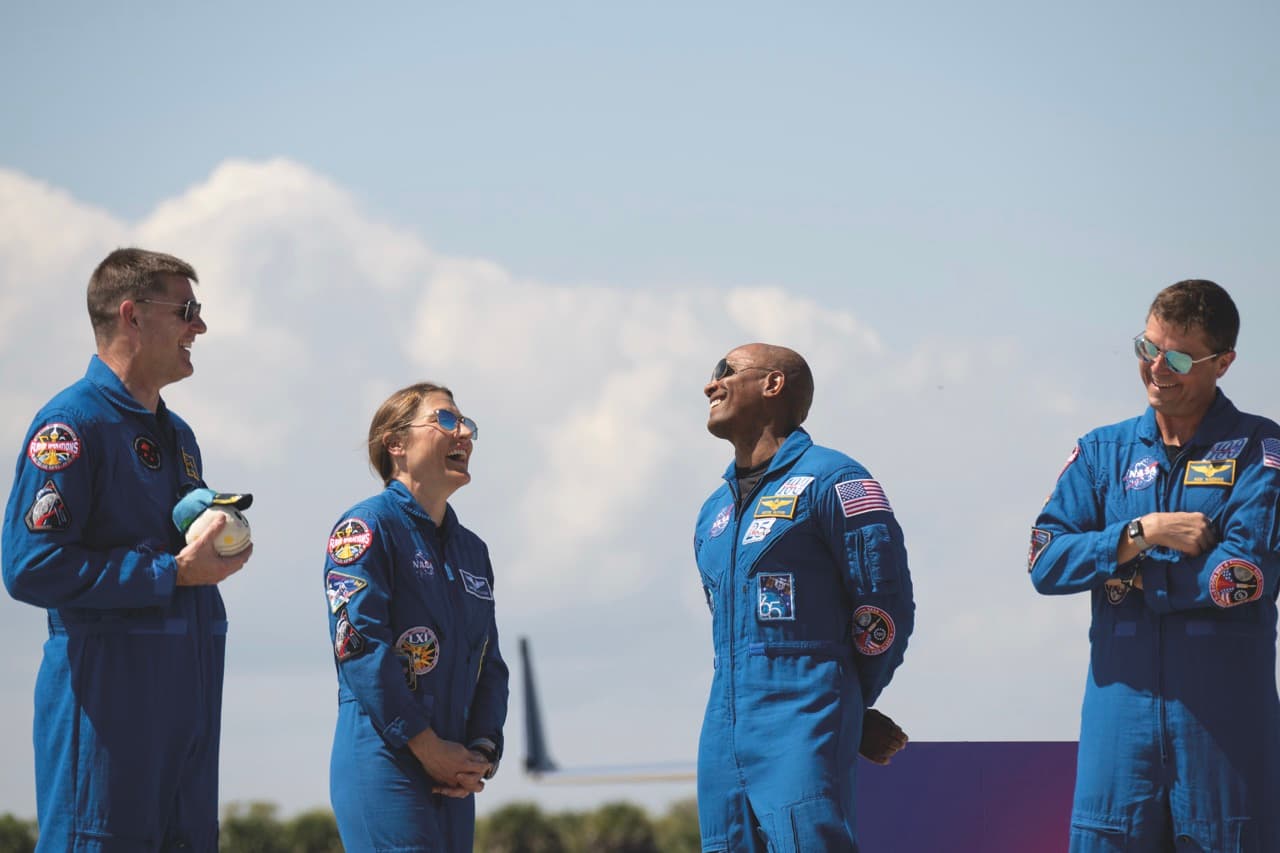
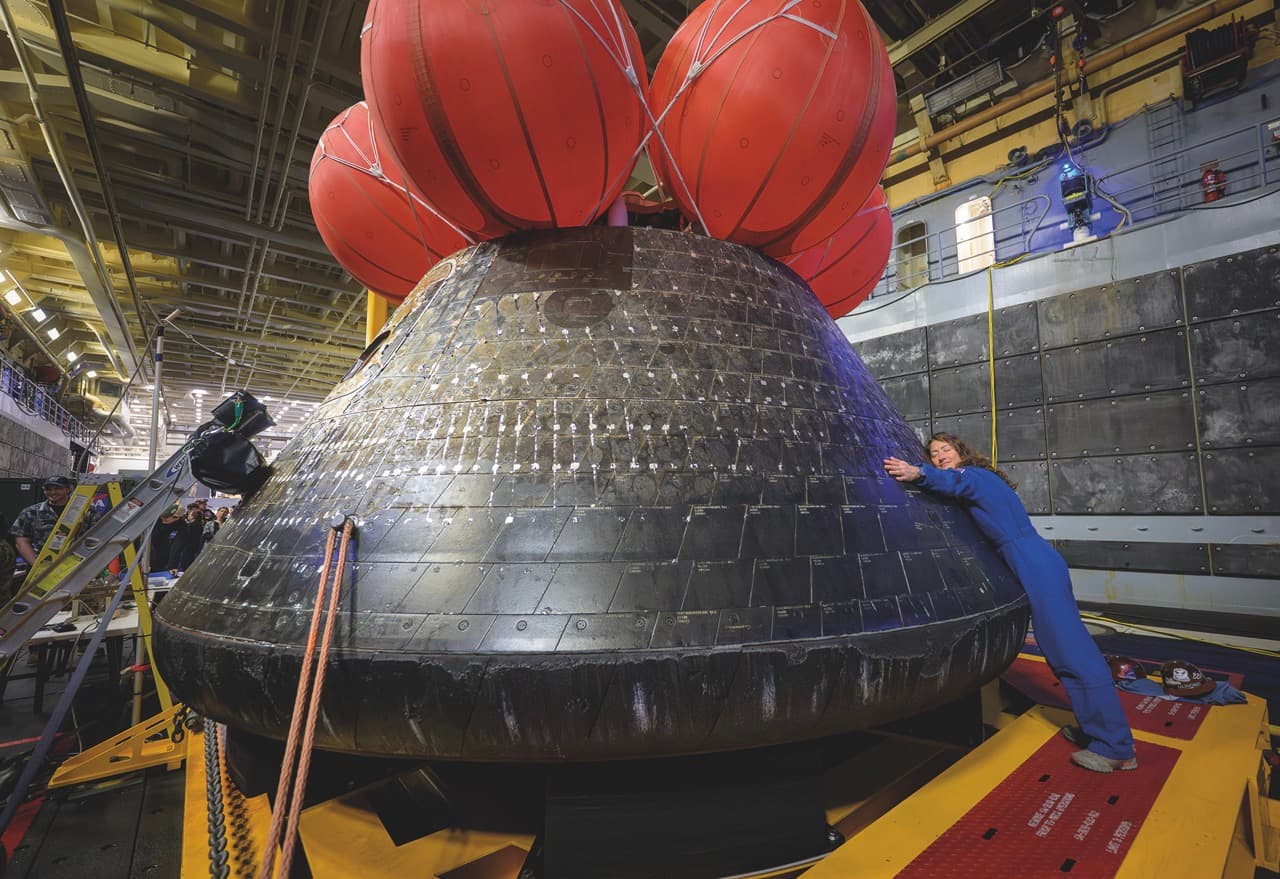
Artemis II “was a test flight,” Sirmons confirms. The Orion saw its crew shoot past the moon – referred to as a lunar fly-by – before returning to Earth’s atmosphere. “The world was travelling with this amazing crew. They were right there with them. It was a human moment. That taught me a lot about the future and what we should provide and keep an eye out for. And we need to provide more.”
NASA’s streaming strategy prioritised digital-first delivery, but traditional cable TV had a role to play, too. CNN, ABC News and Fox News ran continuous digital coverage alongside their televised broadcasts, which included multi-hour specials dedicated to the capsule’s Pacific splashdown, bringing the Artemis II mission to a close.
In 2026, social media moments can make all the difference. NASA hosted continuous live streams on YouTube and Twitch, connecting with a global audience via the platforms’ interactive chat functionalities. Meanwhile, its TikTok and Instagram feeds were much more curated, used for highlights, live Q&As and astronaut-led content – like zero-gravity snacking sessions and aerial views of Earth. NASA’s accounts generated 261 million total engagements between 27 March and 13 April this year; its Instagram following grew by 4.6 million, while its YouTube channel welcomed two million new subscribers.
As NASA prepares for Artemis III, the lunar orbit mission scheduled for 2027, “that’s again going to be about testing, to prepare us for the next moon landing,” says Sirmons. “I hope the world tunes in for that as well.”
Plans in place
Although broadcasters and streaming services shared live footage of the Artemis II mission at work, the content all came from NASA. “They are distributing it to their customers in the way they know best,” Sirmons says of her partners. “I was really excited that HBO Max has Dolby Vision.” Those viewers could reap the benefits of HDR video.
“We had all our partners on a call,” she adds, in case anything went awry in real time. Luckily, nothing did (Houston, no problems here!). “We had no capacity issues,” which was arguably the largest concern – especially since the viewership was significantly higher than they had anticipated. “We were fine. Our partners were fine. We totally pulled it off.”
Artemis II also featured the first use of the Orion Artemis II Optical Communications System (O2O), using laser-based communications instead of traditional radio to beam signals back down to Earth. The system uses invisible infrared light to send and receive data in a single transmission, making it a more efficient transfer method. During the lunar fly-by, Orion sent the first-ever 4K live stream from deep space to two ground stations in New Mexico and California – locations selected for their mild climates and clear skies, minimising signal disruption.
Sirmons expects Artemis IV, the moon landing scheduled for 2028, to hit 250 million viewers – at least. “I want to grow our capacity,” she says. “I want to work with more partners. The more partnerships, the more platforms, the better. I want the audience to have the freedom to be like: ‘This is where I prefer to watch things.’ Boom, NASA is there.”
NASA, according to Sirmons, is known for its contingency planning: “We’re dealing with human life.” On the streaming side, it’s not so serious – but “our infrastructure has so many redundancies built in. We’re making sure that we can go live in less than 20 minutes. Our team works fast – we have protocol set up. For example,” she continues, “if our hub at the Marshall Space Flight Center went down, we can hop to different places. We’re set up already to deal with that. We’re still a fairly new platform, but because we’re NASA, we have to be ready.”
Making history
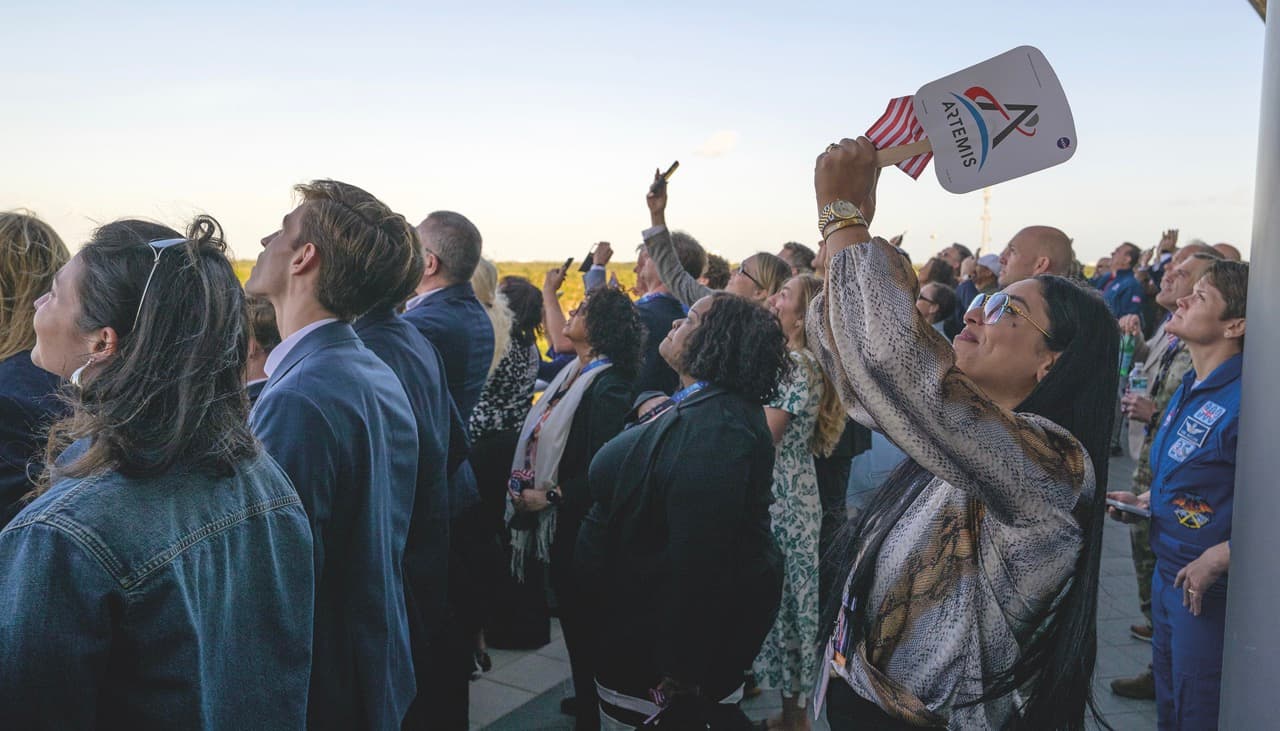
In 1972, culture was culture; it was shared, objectively, by everybody. Cut to 50-plus years later, and our interests are increasingly algorithmic, our culture increasingly niche. But NASA still connects us.
“There aren’t any cultural moments any more – not really,” argues Sirmons, who claims the last one was the Ellen Oscars selfie. “This was an actual pop culture moment. It brought people from all different places, countries, together. And the fact that it was organic…” she trails off. To finish the thought, it is impressive, to say the least. Space exploration has the ability to restore widespread curiosity, international cooperation and faith in humanity, which occasionally falters.
“Space, period, is a team sport,” Sirmons states. “Space flight is a team sport and streaming is also a team sport. The two align fairly well. Our partners,” she adds, “we treat them as colleagues. I work with them on an ongoing basis to ensure success. It’s my job to communicate and make sure that these platforms know that big things are coming.”
We don’t know what’s in store, exactly, besides subject-to-change dates for the next two Artemis missions.
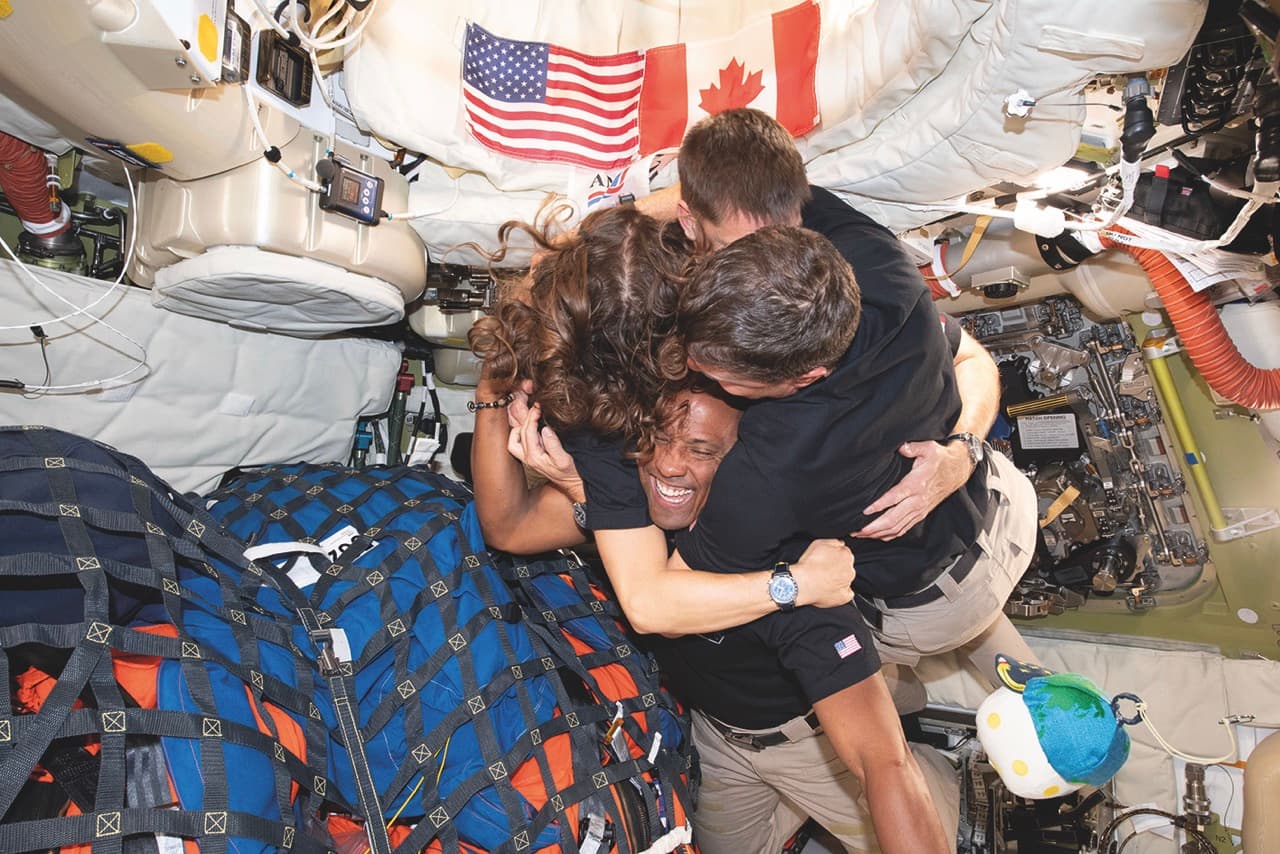
On NASA+, “we have some original documentaries coming out soon; they haven’t been publicly announced yet, but we do have some pretty darn good ones,” Sirmons reveals. “We have more Artemis-geared content, more mission-focused, which I think the audience will be excited about. Moonbound, our series about the Artemis II mission and the crew behind it all – that’s our number- one series on NASA+. We’re going to keep on leaning in that direction.”
A not-for-profit, government-funded organisation, NASA doesn’t have ‘Olympic or World Cup-level staffing’ for its streaming leg, Sirmons admits. “We’re small but incredibly mighty. We have an amazing team that works behind the scenes; they were on it for ten days straight, 24/7. That’s who pulled this off. It’s still hard to wrap our minds around it.”
There is a lot left to do – and look forward to. “The great news is that we’re just getting started,” confirms Sirmons. “I would hope Artemis IV will be the world’s largest livestreaming event. We’re going to break that record – and it’s going to be through us and our partners working together.”
Despite solid viewership numbers for the launches of both Artemis I – an uncrewed lunar flight test – and the James Webb Space Telescope – which actively orbits the Sun and observes our Universe – “we haven’t had this many people watching since the Apollo era,” claims Sirmons. “We have the world’s attention. The odds are very thin, to have that in this fragmented media environment. It’s practically impossible – and that’s what we do. We pull off the impossible on a daily basis.”
She, like all those who have become invested in Artemis, can’t wait for what comes next. “Dust off those boots,” she decrees. “We’re going to the moon.”
This article appeared in our IBC 2026 issue


