
Behind the broadcast: The Times Square Ball Drop
In America, New Year’s Eve is synonymous with the Ball Drop, broadcast nationwide for all to see. We explore how the tradition came to be

|18.12.2025
3 min read
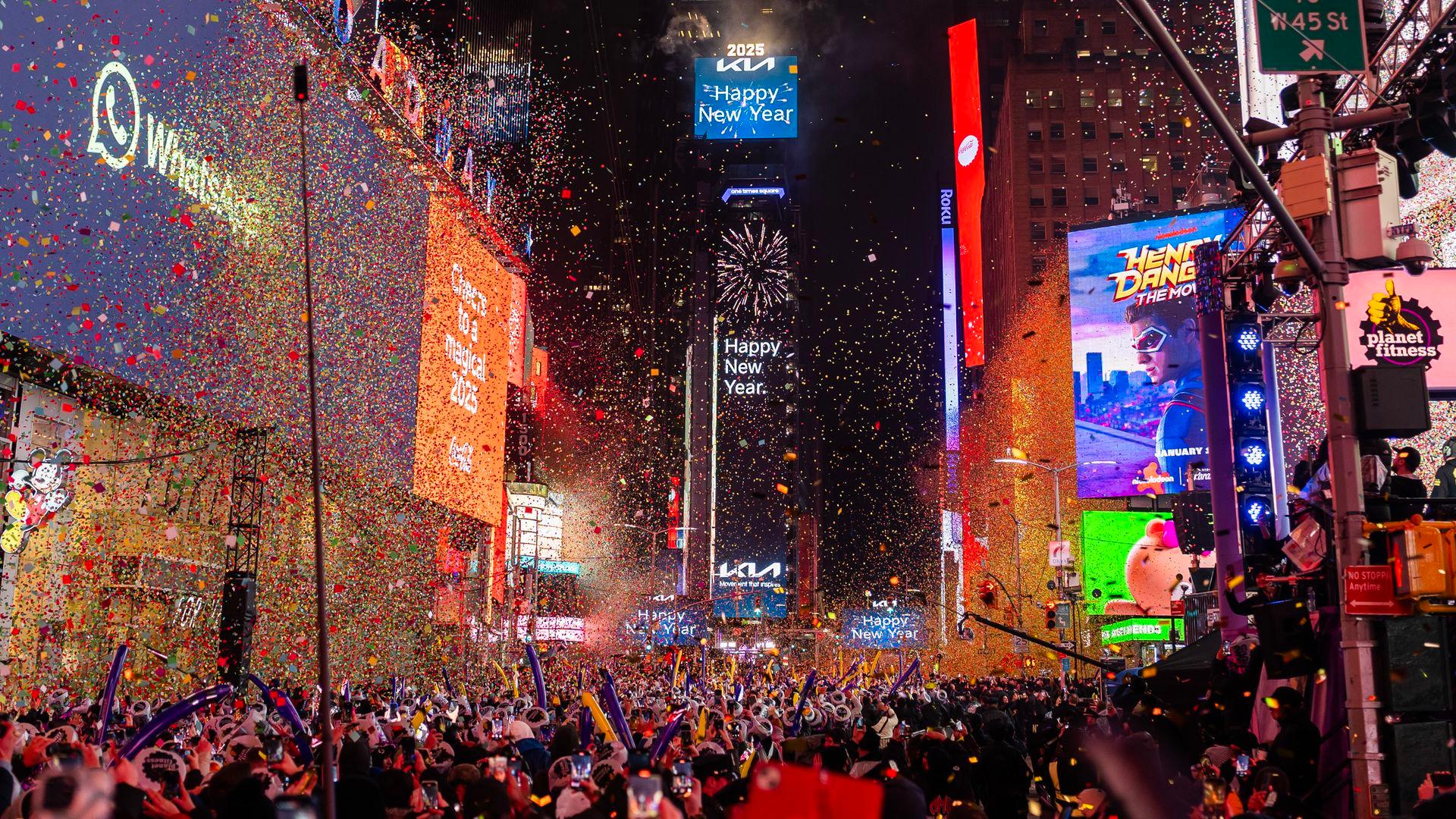
Take it from this New Jersey native: It’s not the new year until Times Square says so – until the Ball drops, Auld Lang Syne plays and you’ve completed your midnight kiss. That famed Ball first descended atop One Times Square in 1907, helping revellers ring in the new year and embrace all that 1908 had to offer.
Over a century later, New York City’s Times Square Ball is still the epicentre of New Year’s Eve. Roughly one million people flock to Manhattan’s Midtown for the annual event, filling the streets to catch a glimpse at the Ball and its broadcasters.
In 1929, Guy Lombardo and His Royal Canadians performed the nation’s first New Year’s Eve broadcast from the Roosevelt Hotel; they went on to do so, albeit from a different location, on CBS until 1977.
Meanwhile, Dick Clark’s New Year’s Rockin’ Eve started to take shape, stealing viewers away from Lombardo’s special, which largely appealed to older folks. Airing on NBC in 1972, the programme featured pre-recorded performances by Blood, Sweat, & Tears, Helen Reddy, Al Green and Three Dog Night. In 1974, Rockin’ Eve moved over to ABC and welcomed Chicago, The Beach Boys, The Doobie Brothers, Herbie Hancock and Olivia Newton-John. In 1977 – the year Lombardo passed – it became the most-watched New Year’s Eve broadcast, with the Royal Canadians being its only real competition.
In 1979, CBS dropped the Royal Canadians in favour of Happy New Year, America, which lasted through 1995. Evidently, no one could dethrone Dick Clark. In 1996, he celebrated his 25th Rockin’ Eve broadcast by sharing playful anecdotes (of noisy Times Square crowds and nudists, for instance) from years past.
Then, panic set in – ‘Y2K’, standing for Year 2000, went from a relatively minimal computational bug to a widespread conspiracy that the world would end. As we now know, it did not. New Year’s Eve broadcasts continued as normal, with ABC even airing an all-day special, ABC 2000 Today, in lieu of Rockin’ Eve. The next year, it returned in full swing and moved up to a 10pm start – aka a primetime slot.
On 31 December 2001, Rockin’ Eve took a more sombre tone than was standard. Just months after the 9/11 attacks and the fall of the Twin Towers, New Yorkers were nervous – as was Dick Clark. Arlo Guthrie, Sting and U2 performed. That same night, CNN debuted its own New Year’s Eve broadcast, which ultimately became New Year’s Eve Live with Anderson Cooper and Andy Cohen.
Since the early aughts, New Year’s Eve broadcasts have been relatively stable, featuring musical performances from Top 40 artists, seeing Ryan Seacrest replace Dick Clark after his passing and introducing simulcasts with Canadian channels. There have been scandals, sure – Mariah Carey’s lipsync incident, disagreements over drag queens, poorly received political remarks – as well as expansions into new markets: New Orleans, Chicago, Las Vegas and San Juan. All the top dogs – ABC, CNN, NBC and Fox – put their own spin on the evening.
In 2020, Times Square barred all public gatherings in the name of Covid-19, and broadcasters aired their shows without a live audience. But the Ball dropped and, even as we were sequestered in our own homes, the New Year’s Eve broadcasts still managed to bring us together.
Share this story


