
Viewer Experience: changes in how we are consuming content
As the primrose path of broadcast TV morphs into the spaghetti junction of digital, viewers are no longer following linear routes but curating their own media mix across streaming apps, social feeds and live events
Words Paul Bray
My mum still sits down with a TV listings magazine and plans her day’s viewing from what’s on offer. But she is 97 and is one of a vanishing breed.
“Today’s viewers are building their own experience across multiple touchpoints,” says Pierce Kafka, CEO of Kafka Media Group. “Someone might discover a new series from a TikTok clip, watch the full episode on a streaming platform, listen to the cast on a podcast next morning, and then buy tickets to a live event because they feel connected to the story. So viewers are no longer loyal to platforms, they’re loyal to stories, personalities and communities, and they’ll follow the content wherever it lives.”
This fragmentation can be a real headache for broadcasters and streaming platforms as they slug it out in the perennial war for eyeballs. But even in this brave new world, some things remain reassuringly familiar, principally the fact that – like my mum – we still want something decent to watch.
“Content remains the primary driver of subscriptions and subscriber retention, and new, exclusive content is one of biggest reasons consumers subscribe or return to streaming services,” says Anastasia Budash, lead analyst at Futuresource Consulting. According to Futuresource’s Living With Digital consumer survey, brand-new Hollywood blockbusters and exclusive TV shows and movies are high on subscribers’ wish lists. Breadth also counts, as we expect a rich mixture of global hits, local content and live events – and we are quite prepared to unsubscribe if we don’t get them.
Content doesn’t all have to be of universal appeal, however, as one of the upsides of the drive to digital has been the ability to produce local or niche programming that is both affordable and watchable.
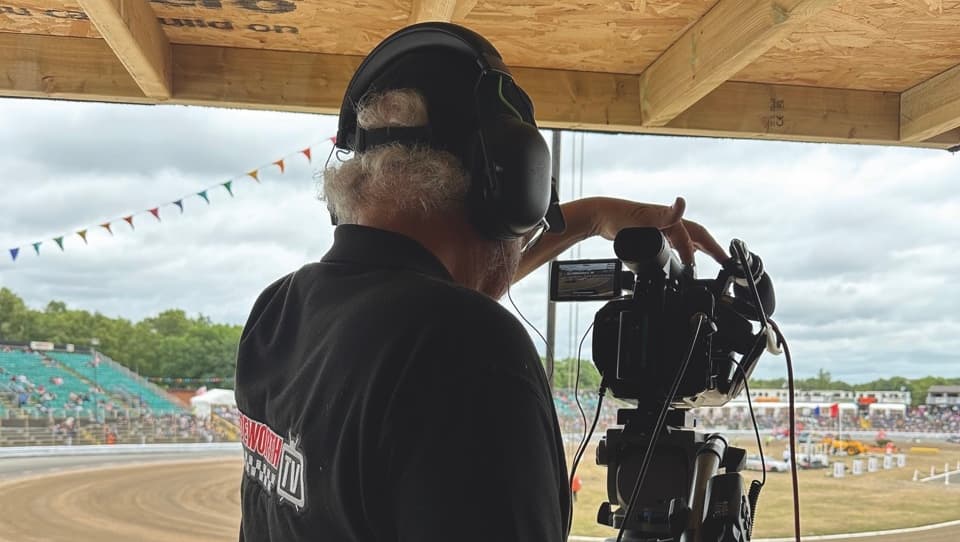
“Lower-league sport, local news, civic meetings, education, worship all have a genuine audience, but they never had an affordable route to reach it,” says Roy Hasson, VP of product marketing and SaaS sales at LiveU. “Spedeworth TV is a good illustration: motorsport that would never have justified a full OB truck now gets LiveU-supported, multi-angle, cloud-produced coverage most weekends of the season. The opportunity isn’t defending the mass audience that used to exist; it’s serving 50 smaller ones at a cost that works.”
The trap is assuming that more accessible and less expensive can mean shoddy. “Audiences haven’t lowered their standards, and a feed that looks or sounds cheap loses them no matter how local it is,” warns Andrew Starks, director of product marketing at Macnica. “A broadcaster’s edge over an open platform is exactly the trust that comes from quality and curation, so the winners will pair accessibility with real production values.”
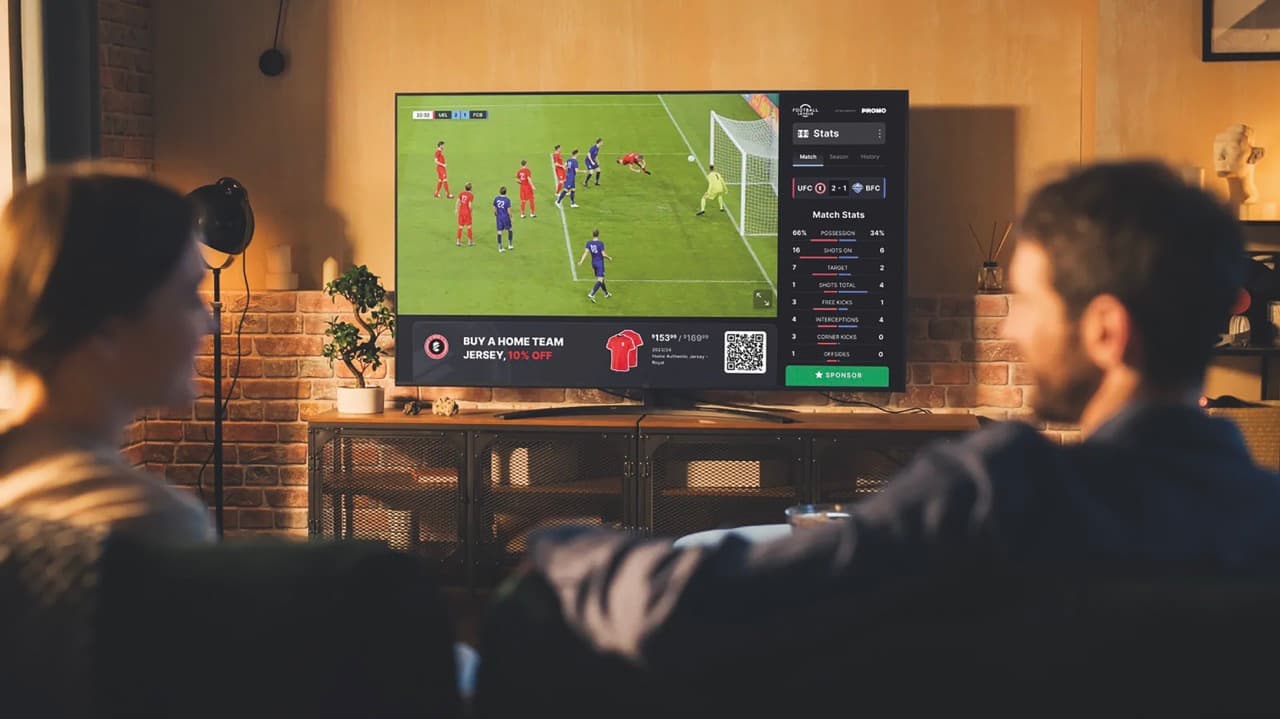
Even when we all watch the same event, we don’t necessarily want to experience it in the same way. “The video feed can remain the hero, but with optional layers that each viewer can explore if they wish,” says Kjetil Horneland, CEO of Ease Live. “Red Bull TV’s Premier Padel coverage combines live match statistics with polls, highlight voting and short ‘playbook’ videos explaining rules and tactics, serving existing fans and people discovering the sport alike.
“And Rally.TV uses interactivity to solve a problem specific to the sport. Rally action unfolds across several cars, stages and split points simultaneously, which is difficult to communicate through video alone. So the experience lets viewers track cars, follow live split times, compare drivers and monitor classifications in real time.”
The key, adds Horneland, is to give viewers control while retaining the storytelling and sense of occasion that distinguish a professionally produced broadcast. If every option feels like part of a single experience, viewers need never leave your service and you need never lose their eyeballs.
The ability to deliver a flexible experience often comes down to asset management. “You need to produce once and version automatically, with a single live production feeding the main output, the alternative angles, a vertical cut for social, a clip feed and a localised commentary track,” says Hasson. “What makes that possible is what you captured in the first place. Bring back one finished programme feed and there’s nothing downstream that can rescue you. Capture everything and index it as it arrives and each additional output costs close to nothing to make.”
For many viewers, the biggest issue is finding something to watch. “Everyone talks about personalisation as though the answer is infinite choice, but it’s the opposite,” says Josh Harrington, head of sales at Simplestream. “Most viewers don’t want more choice. They want less effort.”
“In the UK, 42% of viewers say picking something often takes longer than watching it,” says Giles Tongue, VP of marketing at Bango. “So platforms need to make discovery feel effortless. Better recommendations, clearer navigation and more intuitive personalisation should help viewers find something they’ll genuinely enjoy, rather than forcing them to browse endlessly.”
Interfaces are often designed the wrong way, believes James Kirkham, founder of Iconic. “Most are designed for browsing files, with a homepage built like a shop, when it should be like a friend who knows what you’re in for tonight. And it’s worth exploring the concept of the ‘weathered interface’, where things we often return to carry the marks of our history with them, rather than resetting to pristine neutrality every time. There’s something weird in the way a favourite record sleeve softens at the corners but a streaming library never does.”
Interestingly, Bango’s research has found that a third of consumers would consider letting AI decide what they watch, and almost half think it would do a better job than they can. Around a third would even let AI automatically subscribe, manage and unsubscribe them from services.
“The operators who are pulling ahead are using AI-powered, intent-based search rather than keyword matching,” adds Nelson Hulett, regional VP for the Americas at Setplex. “This allows viewers to simply say what they’re in the mood for and be guided to it.”
In these days of wandering eyes and itchy feet, the actual viewing experience matters like never before. “Metrics around quality of experience are fast becoming critical,” says Jacob Arends, senior product manager for playback and AI at Bitmovin. “If a stream buffers, lags or delivers poor quality, it directly impacts how the viewer experiences the service, and a dissatisfied viewer is never far from churn.”
Nothing undermines a live event like learning from your phone that a goal has gone in before you see it on-screen, so latency is a key issue, adds Hasson.
Advertising needs to be as carefully curated as content. “What I see moving the needle for operators is automated, AI-driven ad detection and replacement, ensuring that a viewer in one market sees an ad that’s actually relevant to them – a local snack brand, say, rather than a car insurance spot clearly made for somewhere else,” says Hulett. “That kind of cultural fit is what keeps free, ad-supported viewing engaging for audiences and valuable to advertisers.”
If ads need to be relevant to viewers, so the viewer needs to be relevant to the ad. “When we plan streaming TV campaigns, we’re no longer buying a slot in a linear run, we’re bidding, impression by impression, for a specific household at the moment it chooses to watch something,” says Chris Cochrane, chief strategy officer at Plug Media.
“The urgent question for broadcasters is whether their advertising is as addressable as their content. The platforms winning ad revenue are the ones that made
their inventory fully biddable, attached genuinely useful first-party signals to it and let buyers control frequency and sequencing across everything they sell.”
Cochrane cites Amazon. “Making advertising the default on Prime Video instantly created one of the largest premium streaming ad audiences in the market. But the more important move was connecting that inventory to the richest first-party commerce dataset in advertising and making all of it biddable through a demand-side platform alongside audio, display and online video. Netflix is following the same logic building out its ad stack.”
This super-granular approach can also improve the viewing experience. “When someone watches across four services in an evening, and each service caps frequency in isolation, the viewer can see the same creative eight times even though each platform believes it behaved responsibly,” says Cochrane. “Programmatic buying is currently the only practical answer, because a single buying platform holding the bidstream across services can cap and sequence exposure at the household level.”
Measurement remains a challenge when viewers hop between media. “Most video services can see engagement inside their own app reasonably well, but the moment a viewer’s journey touches customer care, marketing, a distribution partner or a different device, that picture breaks apart,” says Bleuenn Le Goffic, VP of business transformation at Accedo. “Very few organisations have a genuinely unified, cross-surface view of a single viewer, which makes it hard to measure behaviour that now spans broadcast, streaming, social and live in the same week.”
But seen in the right light, self-curated viewing per se can be more opportunity than threat. “Fragmented viewing is only a problem if you sell audiences the old way,” says Cochrane. “A viewer who assembles their own mix of drama, sport, podcasts and live events is telling you far more about themselves than a panel demographic ever could and platforms that capture those signals cleanly can charge a structural premium for their inventory.
“The opportunity is to stop mourning the decline of the mass audience and start monetising the addressable one.”
This article appeared in our IBC 2026 issue


