

Distributed production: Meet broadcast’s new backbone
The era of the all-in-one broadcast truck is fading fast, as distributed production enables teams to collaborate from pretty much anywhere

|17.03.2026
6 min read
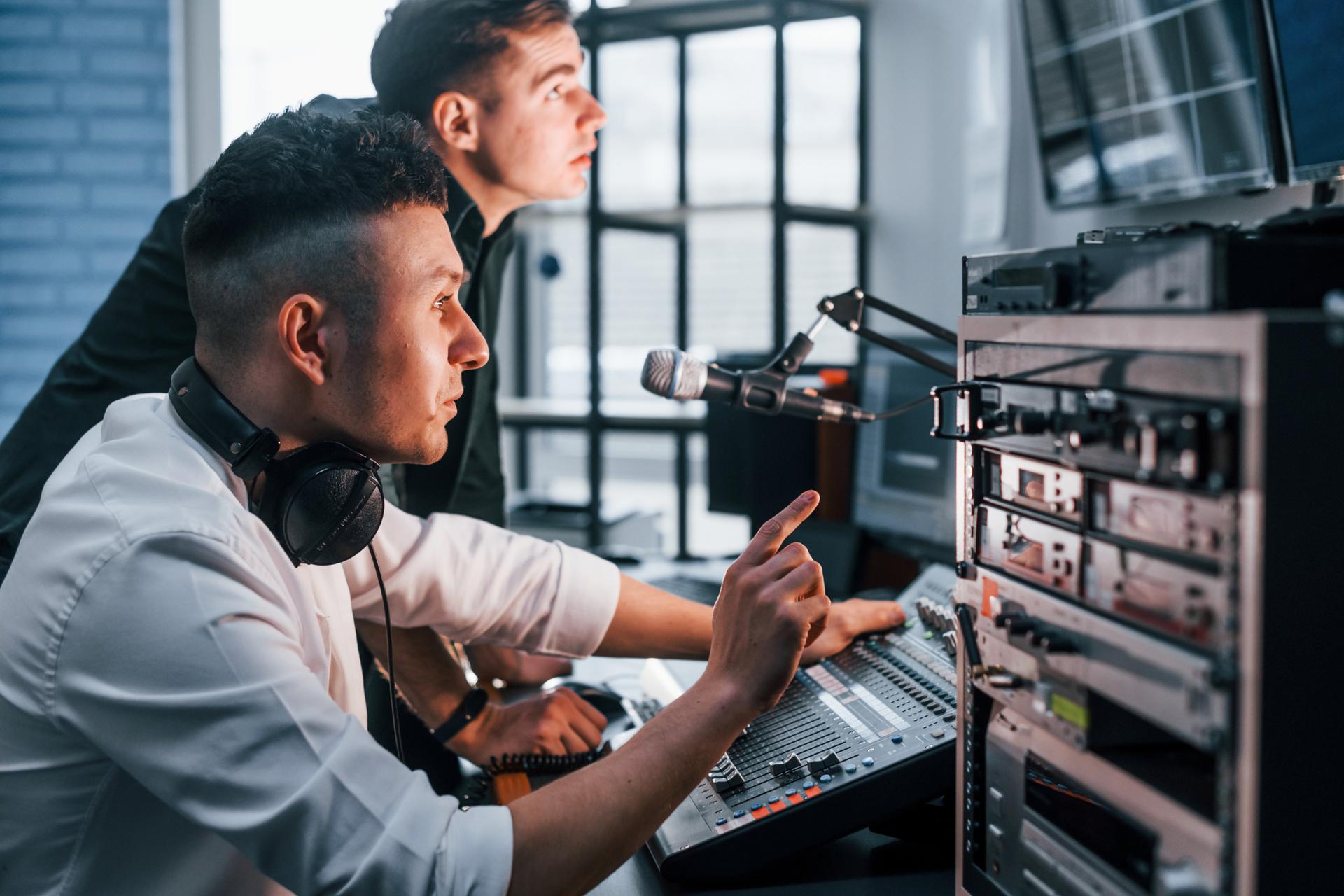
As we make our way into spring, time is ticking ever closer to one of the most ambitious live broadcasts to date. The FIFA World Cup always brings with it a host of technical challenges for the media-tech industry to get its teeth into, but this year brings with it a new layer of complexity.
Unfolding across multiple countries and time zones, this year’s event will require broadcasters to orchestrate thousands of hours of live coverage across multiple continents. And it’s very on-brand for this month’s Signal topic: distributed production.
Gone are the days where every piece of broadcast equipment had to sit inside a single truck parked up outside a stadium. Today, cameras might be in Mexico City, commentators in London, replay operators in Los Angeles and graphics teams working from home offices. The glue that binds them together consists of sophisticated broadcast infrastructure that involves an extensive array of hardware and software solutions.
Trucker life
For a long time, outside broadcast (OB) trucks have become a staple for any major live production. Complex and powerful studios-on-wheels, they are usually packed full of switchers, replay workflows, audio desks and production teams – and are often found parked up outside the event’s venue. Although still considered a very crucial component to live broadcast, with a notable post-Covid resurgence, they are not the cheapest – or the most sustainable approach either.
That’s why the industry has seen a shift toward REMI (remote integration model) production. In REMI workflows, cameras and microphones capture the action on location while feeds are sent back to centralised facilities where producers can assemble the final programme. The concept particularly exploded during the pandemic, but quickly cemented itself as a core approach for large-scale live broadcast.
Another key development in live production has been bonded cellular transmission. Companies like TVU Networks, Dejero and LiveU have innovated solutions that allow broadcasters to combine multiple cellular connections, often including 5G, to send high-quality video signals from pretty much anywhere – making them particularly useful for hard-to-reach filming locations.
Portable transmitters such as the TVU One use multiple 5G modems and antennas to achieve speeds exceeding 100 Mbps with sub-second latency; meaning a roaming camera operator can effectively become a mobile broadcast unit.
In a recent experiment in Spain broadcasters successfully produced a multi-camera news broadcast entirely over a private 5G network, which involved synchronising several feeds and editing them remotely in the cloud. Similar tests have been deployed for the likes of the Queen’s funeral and the King’s coronation.
Similarly, new field units like LiveU’s LU900Q integrate AI-driven network management and dynamic connection switching, designed to maintain stable video transmissions in congested environments like packed-out stadiums.
Cloudified control rooms
There’s the way in which we transmit the video signals, but what about the way in which it’s managed? Instead of routing feeds into racks of hardware switchers and servers, many broadcasters now process them inside cloud infrastructure. Platforms like TVU Producer allow users to mix multiple camera feeds, add graphics and distribute live streams entirely online.
In some cases, even the master control room is moving to the cloud. BitFire’s cloud master control platform, for instance, delivers functions traditionally associated with broadcast facilities (captioning, ad insertion, graphic overlays), through a software-defined environment. This can allow broadcasters to spin up production environments almost instantly – so if a new feed is needed, or a regional commentary version must be generated – the infrastructure can be deployed in minutes.
This is similar to the way editing is also now approached, with the same sorts of cloud infrastructure transforming post-production workflows. Tools like Blackbird enable editors and producers to log, review and cut footage remotely – even while the material is still uploading from the venue. The platform also allows frame-accurate editing in the cloud and supports multicamera workflows with up to 18 sources. Because the editing interface runs remotely while heavy processing happens elsewhere, editors can work on lightweight laptops from almost anywhere. For large sporting events, generating hundreds of hours of content every day, that degree of flexibility is essential. Highlights packages, social clips and digital features can be produced by teams scattered across the globe.
It’s all about IP
Another transition that has been quietly taking place in parallel with the recent growth in distributed production practice has been the move from traditional broadcast infrastructure to IP-based video transport.
Instead of relying solely on dedicated satellite links or fibre circuits, broadcasters are increasingly moving video via public internet, augmented by advanced networking technologies. Platforms like GlobalM demonstrate how software-defined video networks can route broadcast-quality feeds across cloud providers, fibre networks, satellite connections and even 5G links in real time.
Another key piece of the distributed puzzle is edge computing, where processing tasks are performed close to where data is generated, often at the edge of a cellular network. This approach reduces latency and network congestion while enabling live applications like remote camera control or live graphics insertion. The result allows for geographically distributed teams that can operate almost as if they are in the same room.
Controlling the chaos
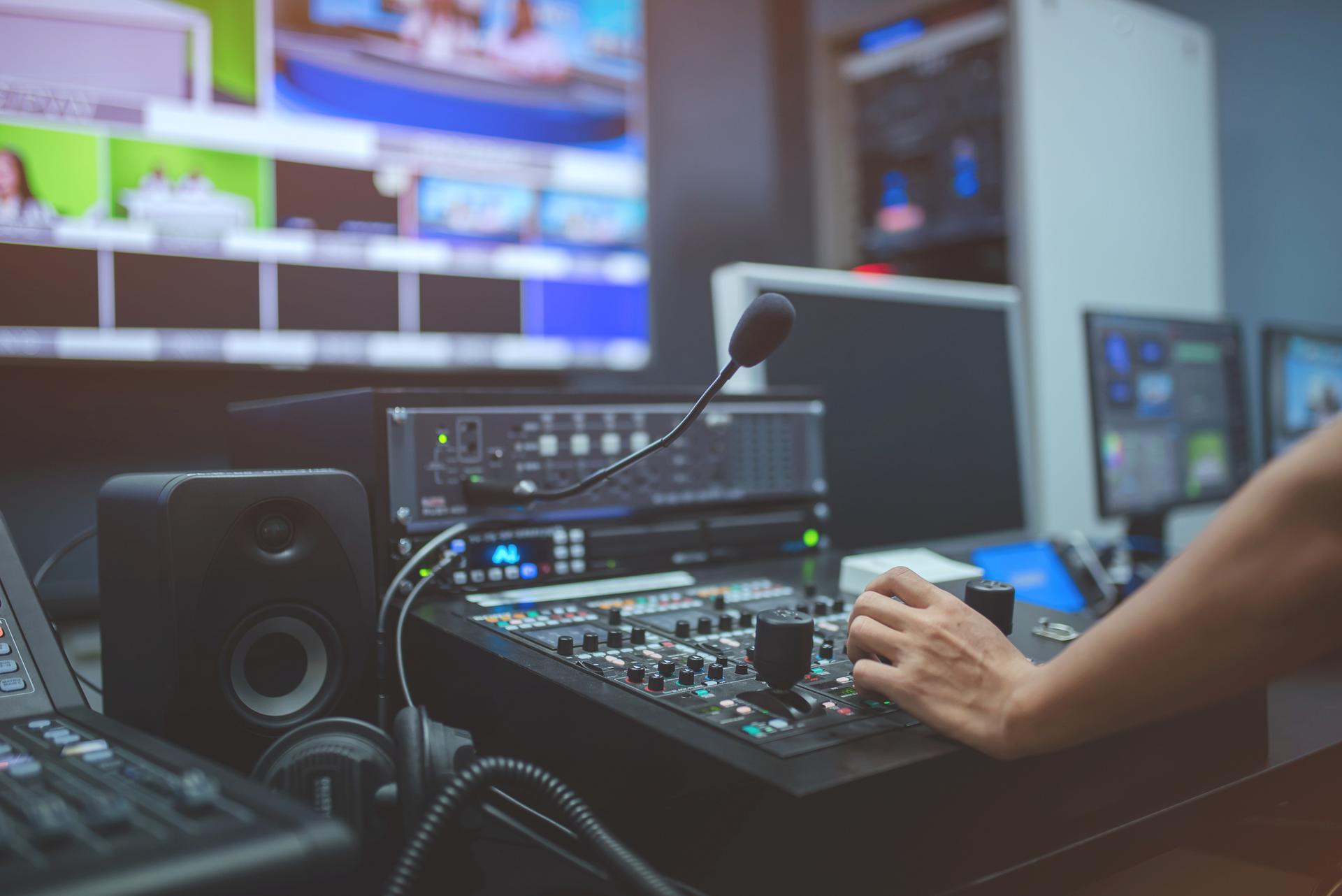
Coordinating hundreds of cameras, feeds and operators across countries and continents requires some serious orchestration. Control platforms are central to this, with systems like NEP’s Total Facility Control integrating hardware and software from multiple vendors into a single interface – allowing engineers to manage IP networks, routing and monitoring from one dashboard.
During large-scale sport events, for example, these orchestration layers help ensure signals move reliably from stadium cameras to global audiences, while giving engineers live insights into network performance.
Overall, it’s clear that distributed production is no longer an experimental approach, with it rapidly becoming the new backbone of modern broadcast. Cellular transmission tech offers mobility; cloud platforms enable scalable production – IP networks move signals around the world and orchestration software keeps the whole operation running smoothly.
For broadcasters preparing for the next wave of global events, mastering this method is no longer optional.
Check out the rest of the March 2026 Signal here.
Share this story


