
Monetisation meets XR
Extended reality is opening doors for broadcasters and sponsors, offering innovative ways to engage audiences and monetise experiences

|09.01.2026
4 min read
Extended reality (or XR) technology is opening fresh monetisation avenues that go beyond the basics. From immersive, in-scene product placements to augmented experiences and virtual-only ads (for NHL viewers, think of the digitally enhanced dasherboards), XR allows broadcasters and their advertisers to engage audiences in novel ways – and profit accordingly.
Companies like Pixotope and Accedo, for instance, specialise in XR solutions specifically designed for broadcasters. “Pixotope enables broadcasters to monetise content by enhancing storytelling and delivering richer visuals that keep viewers’ attention,” begins Simon Davis, the organisation’s chief experience officer. Pixotope offers a unique blend of XR, augmented reality (AR), virtual studio and real-time graphics and tracking solutions, all based on the latest version of Unreal Engine – ‘without the usual heavy custom engineering,’ he adds.
While static ads and blatant sales attempts have long been the norm, XR encourages a more sophisticated approach. “Blurring the lines between editorial content and branded moments maintains viewer engagement,” argues Davis. “For advertisers, XR and virtual production enable immersive brand integrations, seamless ad placement and more personalised, tailored content,” addressing each viewer’s preferences as a consumer of entertainment.
Playing the field
Chances are, you’ve seen at least one of Pixotope’s solutions at play. Fox Sports uses the company’s technology to ‘drive their large XR stages, make immersive editorial and ensure sponsored segments are integrated into show content with the same look and feel,’ says Davis. “TNT Sports used Pixotope to embed Stella Artois’ logos in the Roland Garros studio and to provide a virtual 3D fly-through showing match details at the location, rather than flat graphics.”
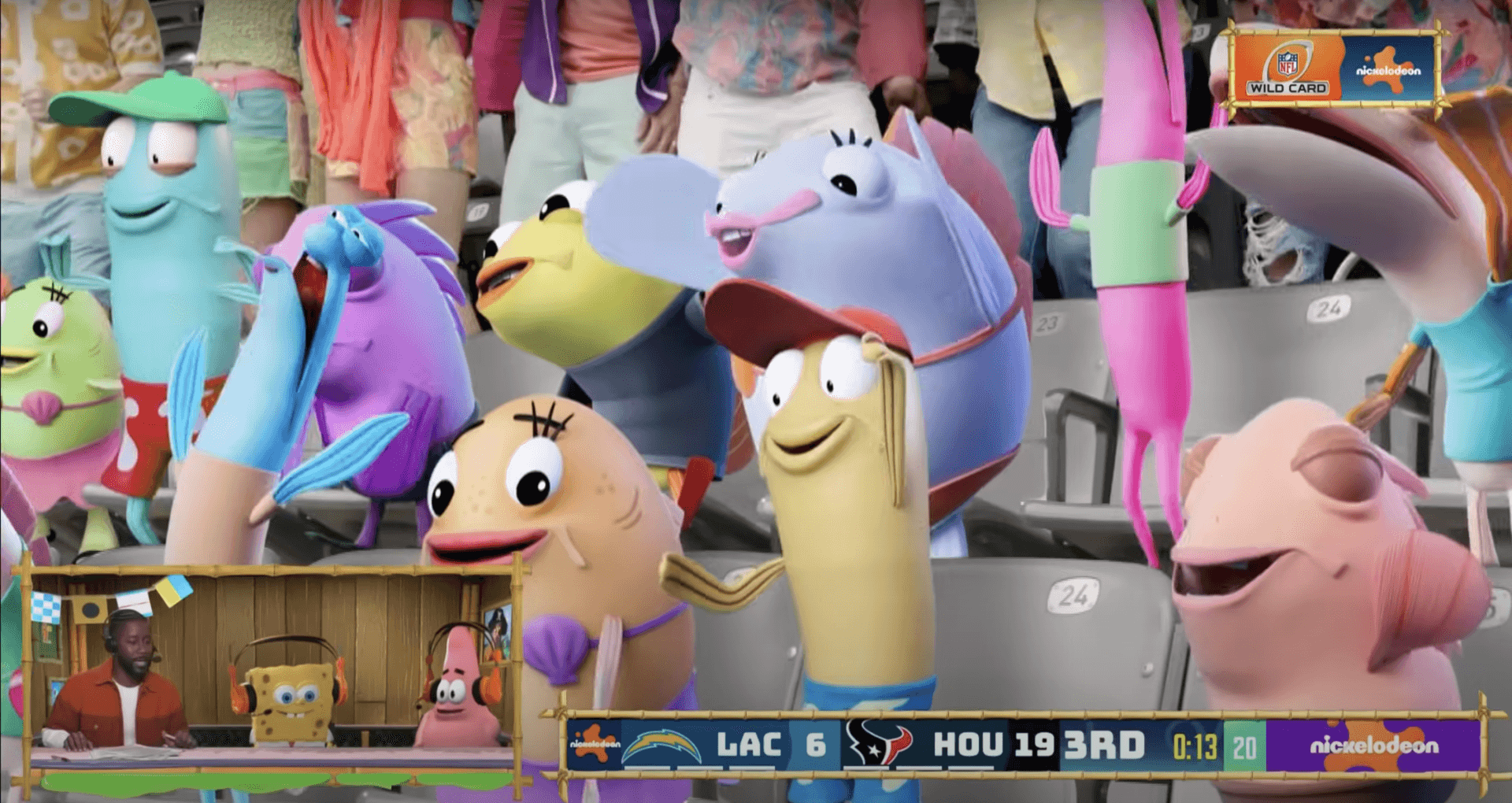
Nickelodeon famously incorporated Pixotope’s XR into its Super Bowl alt-casts, live-animating characters from SpongeBob SquarePants and spicing up the NFL championship for fans and their families. This choice ‘attracted new audiences, secured new sponsorships and increased overall revenue,’ Davis claims.
Pixotope’s technology also powers what Davis calls ‘venue takeovers’, which appeal to fans both in attendance and at home. Carnival Cruise Line, for instance, created a virtual private island on an NFL field, ‘exciting viewers and promoting its product directly within the stadium.’ Meanwhile, “Chipotle broke the ice with a virtual burrito bowl skating onto the screen for an intermission takeover during ice hockey coverage,” Davis describes.
A world of possibility
While Pixotope is making its mark on the wide world of sports, Accedo covers all types of live events. “We have an XR solution that enables operators, rights holders and broadcasters to effortlessly create powerful spatial computing experiences,” begins Lucy Trang Nguyen, business development director for emerging technologies at Accedo. The company also offers XR consultancy, ‘supporting video service providers to create and launch cost- and time-efficient, video-centric XR experiences.’
Nguyen considers viewers as active elements of live events, rather than passive spectators. “With XR, they experience content in a much more interactive way; this opens new and powerful opportunities for OTT providers and advertisers,” she explains. “This could, for example, involve alternative camera angles alongside sponsored immersive experiences; for reality TV, this could introduce overlaid contestant profiles, interactive polls and live voting,” she muses. Lastly, “adverts can also become more interactive as well as being highly personalised,” Nguyen believes. “Viewers could interact with a 3D model of a product, enabling them to examine it from every angle.”
Accedo is a founding partner of an organisation called the XR Sports Alliance (XRSA), a ‘non-profit initiative bringing together leaders in sports, media and technology to accelerate the adoption of extended reality across the global sports ecosystem,’ Nguyen details. The XRSA’s first deployment took place last summer during the world’s first all-electric race boat championship, where Accedo, HBS and the E1 Series team created content ‘specifically for immersive experiences in both 180- and 360° formats’, she says.
This deployment demonstrated that the key to successful XR integration – and resulting monetisation – is striking the right balance between the technical and emotional elements of any event. Storytelling, Nguyen and Davis agree, is key to the audience’s experience – and will only become more pertinent in XR-driven advertising.
Check out the rest of the January Signal here!
Share this story


