
Inside virtual studios: How XR is redefining broadcasting
Today, virtual studios are widely used across elections, sporting events and major news coverage, transforming how stories are presented and experienced

|09.01.2026
5 min read
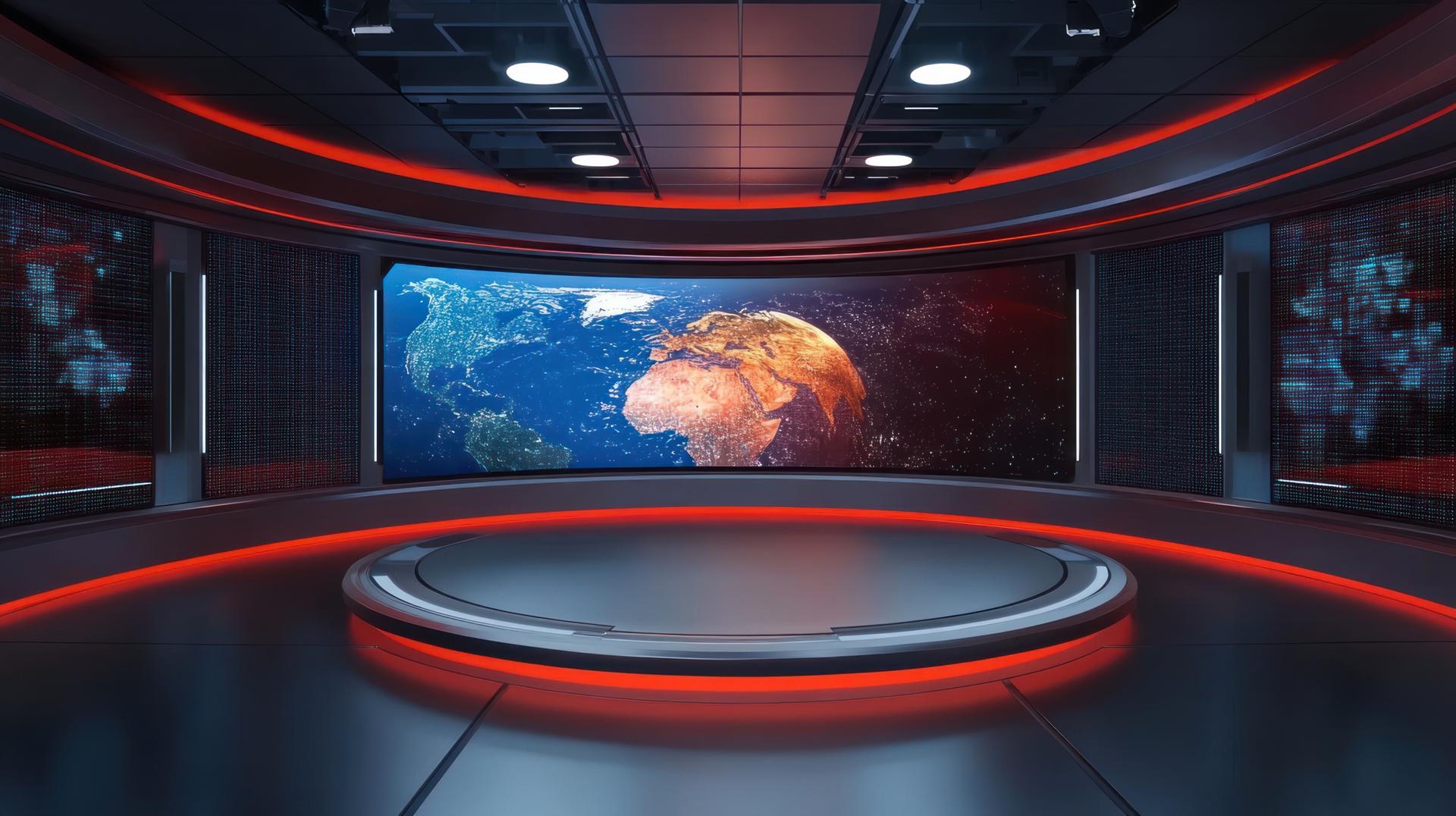
Today, virtual studios are widely used across elections, sporting events and major news coverage, transforming how stories are presented and experienced. Here, we highlight notable examples of virtual studios in action.
The modern newsroom is increasingly shaped by immersive virtual studios, as broadcasters adopt advanced technologies to create more engaging, flexible and efficient productions. Organisations such as NBC and the BBC have successfully integrated virtual studio technology to enhance storytelling and adapt quickly to changing news demands.
Although virtual studios have existed since the 90s, recent advancements in real-time graphics and production tools accelerated by the Covid-19 pandemic have driven their resurgence. With remote reporting becoming essential, virtual environments offered broadcasters a practical and effective solution.
Electoral Coverage
CBS News decided to utilise AR graphics, virtual set design and election data visualisation during their coverage of the 2022 US midterm elections, while at the same time connecting these elements and their viewers to CBS News’ unique Times Square location in New York City.
To help achieve this, CBS News combined the real-time compositing and rendering power of Vizrt’s Viz Engine 5 with Epic’s real-time 3D creation tool, Unreal Engine 5.
CBS again utilised the technology for the 2024 presidential election coverage. This time, the system utilised Zero Density’s Reality solution integrated with Unreal Engine rendering and Chyron Prime graphics platforms, with the virtual set designed by Myreze. The new features for 2024 included a touch-operated augmented reality table for displaying potential electoral outcomes, a virtual set extension of the physical set through a green screen window and a virtual ceiling extension.
For the 2024 UK General Election, the BBC enhanced its coverage with a virtual production set-up at its Cardiff studios. Creative Technology delivered an immersive LED volume featuring a curved Roe Black Pearl wall and Roe Black Marble floor, providing a dynamic backdrop for Jeremy Vine to present complex electoral data.
Ghostframe technology enabled multiple camera views with tailored content, while G2 media servers powered real-time graphics and live results. The curved LED design replaced traditional greenscreen with a flexible, data-driven broadcast environment.
Virtual newsrooms
One of the companies leading the way with their virtual sets technology in the newsroom is Zero Density. The company’s virtual production and real-time motion graphics tools are being utilised by a number of broadcasters.
Virtual newsrooms ensure that broadcasters are able to quickly adapt to different environments when covering breaking news stories. With new technologies, broadcasters can now produce content at the speed of news and integrate virtual elements into live broadcasts.
Zero Density provide a platform that uses the same rendering backbone across all components, so the assets for virtual studios only need to be created once and assets can be easily shared between production studios.
Sports studios
Virtual studios have become commonplace in sports broadcasting. During their broadcast of Euro 2024, BBC Sport relied on virtual and mixed-reality studios in Berlin near the Brandenburg Gate, using XR, AR and large LED walls for immersive analysis. TV 2 Denmark, also took to the technology, building a studio in the Copenhagen fan zone with a remote production hub in Odense.
Broadcasters leveraged these advanced set-ups using custom software and remote control to create dynamic, data-rich environments and combining physical sets with digital elements while reducing the reliance on traditional OB trucks.
Sky Sports have recently followed suit for their coverage of the Premier League. ROE Visual partnered with Sky Sports, supplying high-performance Ruby RB1.5 LED panels for a mobile broadcast studio to be used throughout the premier league season. The pop-up studio was set up to tour over 42 stadiums across the UK, delivering premium broadcast quality.
The studio debuted at the start of the Premier League season last August, marking the beginning of a three-year touring programme that aims to bring immersive storytelling and studio-quality coverage to football fans across the UK.
The Sky Sports OB studio was designed to be deployed quickly and efficiently on site and enables presenters to deliver real-time analysis, interviews and match-day content in an environment that ultimately mirrors the production quality of traditional studios, without the need to be tied to a single location.
The future of broadcast
Immersive storytelling for news is becoming the new norm. This enables broadcasters to interact with environments and provide reconstruction visuals. Virtual studio technology has also been deployed throughout election coverage across the globe, with viewers now being able to see dynamic election simulations as if hosts are inside the maps, as well as broadcasters showcasing interactive voting and polling maps.
The technology is perhaps being most utilised in sports broadcasting, with LED walls instead of green screens being used to reduce post-production and allow live interaction with graphics. Virtual broadcast studios are not only easier to set up, but they also reduce the need for extensive broadcasting resources.
Check out the rest of the January Signal here!
Share this story


